
Water Plants
Typha
Cattail
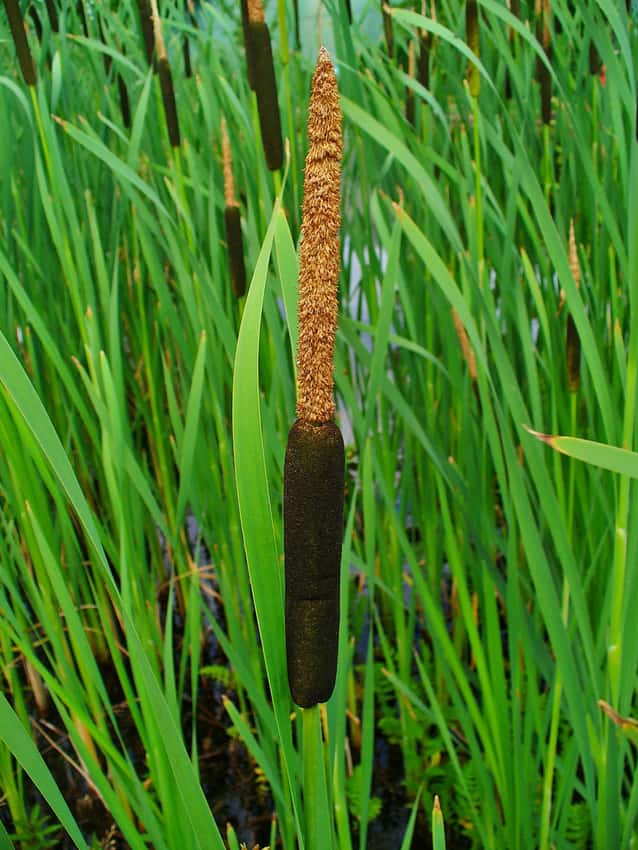
Tall, upright leaves and familiar brown seed heads give cattails their distinctive wetland silhouette. They provide cover at pond edges but can quickly outgrow a small water garden; keep spreading roots contained.
At a glance
- Sun
- Full sun to part shade
- Pond placement
- Pond margin; use a large, contained planting.
- Winter care
- Cattails lose their foliage seasonally. Remove dead leaves and old flower stems before fresh spring growth; winter hardiness depends on the species supplied.
- Water
- Wet soil or shallow water
Sizes & prices
- 6''Call for price
Catalog updated September 8, 2026. This is not a live stock count; please call to confirm availability and price.
Ask about this plantSelect a section to expand.
Resistance & tolerances
- Wet soil
- Tolerates standing water.
Water garden care
- Selection
- Species and final height vary; the photo illustrates broadleaf cattail.
- Planting method
- Aquatic basket for pond-edge planting; keep spreading roots contained.
- Spread
- Grow in a container and divide crowded roots.
- Pruning
- Remove dead stems before spring growth.
- Size & habit
- Size depends on species. Broadleaf cattail, pictured, reaches 5–10 ft. tall.
Sources & photo credits

Size & selection: Cattails range from miniature forms to large wetland plants. Broadleaf cattail, shown in the photo, reaches 5–10 ft. tall; confirm the supplied species before choosing pond space.
Reviewed September 27, 2026. Growing conditions vary by location.