
Vines
Wisteria frutescens 'Amethyst Falls'
Amethyst Falls American wisteria
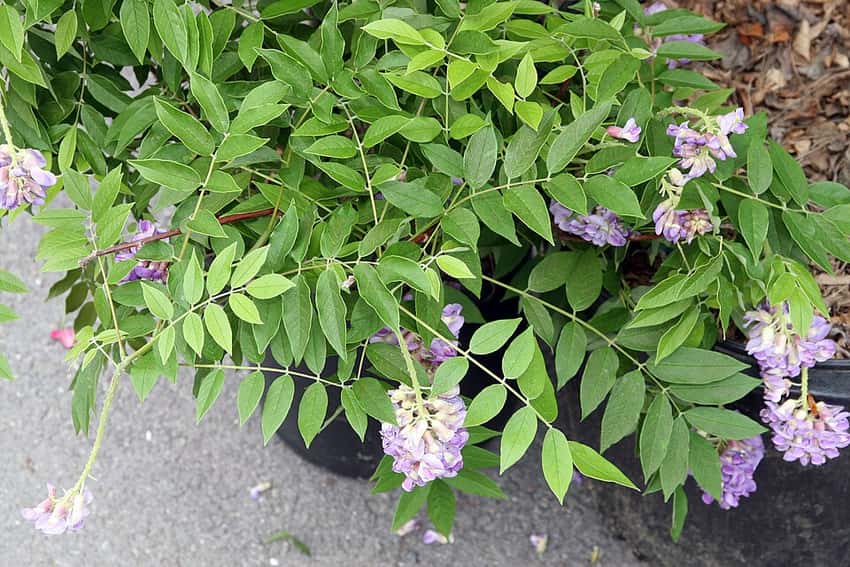
Short, fragrant lavender-purple flower clusters appear after the leaves emerge, with a possible second flush later. This American wisteria is less rampant than Asian wisterias but still needs a sturdy support. Prune after flowering; shorten long shoots again as needed in summer.
At a glance
- Sun
- Full sun for best flowering
- Mature size
- 15–25 ft. with support tall × 10–15 ft. wide
- Water
- Average; well-drained soil
- Hardiness
- USDA zones 5–9
- Bloom
- Lavender-purple; late spring, possible repeat
Sizes & prices
- #3$59.99
- #3 30" trellNew reliable blooming wisteria$64.99
- #5$64.99
Catalog updated September 8, 2026. This is not a live stock count; please call to confirm availability and price.
Ask about this plantSelect a section to expand.
Resistance & tolerances
- Deer
- Generally resistant; not deer-proof.
- Drought
- Water during establishment; tolerant once rooted.
Resistance is not a guarantee; deer and rabbits may browse any plant.
Pollinators & wildlife
- Attracts
- Butterflies, Hummingbirds
Native range
- Native range / parentage
- The parent species is native to the southeastern United States, including Kentucky. Cultivated selection of a Kentucky-native species; not wild local stock.
- Tristate native status
- The parent species is native to the southeastern United States, including Kentucky.
Safety & handling: Wisteria seeds and pods are toxic if eaten.
- Cats, dogs & horses
- NC State Extension lists this exact wisteria cultivar as having a pet-ingestion risk. Keep seed pods and other plant parts out of reach.
If a pet eats a potentially toxic plant, contact your veterinarian promptly.
Seasonal interest
- Bloom
- Late-spring purple clusters; a later repeat is possible.
Growing & care
- Support
- Twining woody stems; substantial arbor or pergola
Train a few main stems while young. Prune after flowering and again as needed to keep growth off gutters and small trees.
Sources & photo credits
Kew Science, Plants of the World Online
Photo: David J. Stang · CC BY-SA 4.0

Reviewed September 25, 2026. Growing conditions vary by location.