
Tropicals
Plumeria spp. & hybrids
Plumeria · frangipani
Also known as: Frangipani
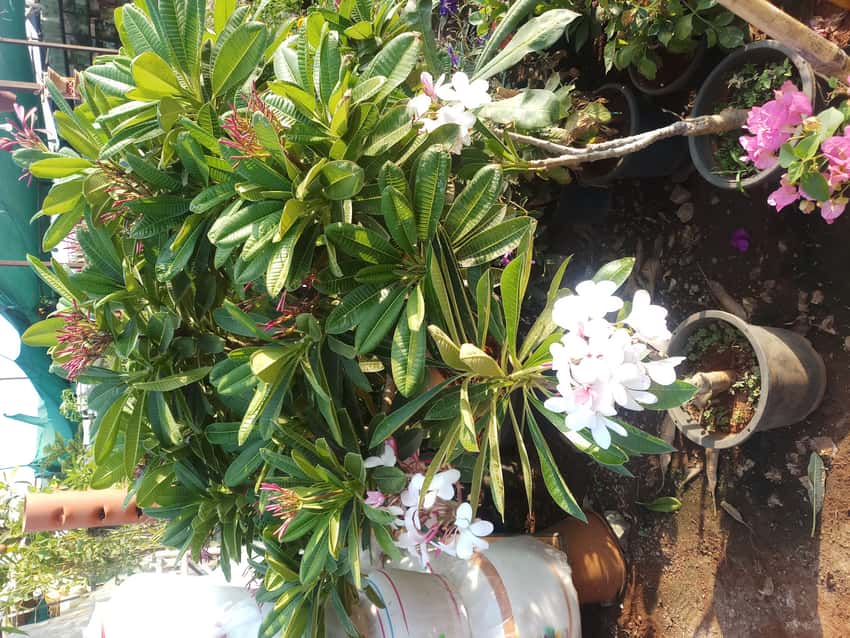
Thick branches carry leathery leaves and fragrant clusters of waxy flowers. Flower colors and growth habits vary among the selections. Grow it in a sunny patio container in summer, then protect it indoors; some types naturally lose their leaves during winter rest.
At a glance
- Water
- Let the mix dry between waterings; less in cool weather
- Life cycle
- Tender shrub or small tree
- Bloom
- Fragrant summer–fall clusters; colors vary.
- Light
- Bright sun
Sizes & prices
- 5" clay$9.99
Catalog updated September 8, 2026. This is not a live stock count; please call to confirm availability and price.
Ask about this plantSelect a section to expand.
Resistance & tolerances
- Wet soil
- Overwatering may cause fatal root rot.
Keep in mind: Milky sap may irritate skin and eyes; wear gloves when pruning.
Growing & care
- Soil
- Coarse, fast-draining mix with perlite or pumice.
- Winter
- Bring inside as nights drop into the 40s°F; reduce watering substantially when dormant.
- Feeding
- Feed while actively growing; stop during winter rest.
- Pruning
- Usually little needed; prune in spring if required.
- Pests
- Check for mites, mealybugs and whiteflies.
- Size & habit
- Size varies from compact shrubs to trees over 30 ft. in warm climates. Grow in a movable container here.
Sources & photo credits
University of Wisconsin Extension

Image notes: Plumeria rubra. Representative species illustrated: Plumeria rubra. Actual assortment species, cultivars, and colors vary. Uncropped.
Size & selection: Forms range from compact shrubs to trees exceeding 30 ft. in warm climates. Grow in a movable container here; final size depends on species, cultivar and pruning.
Reviewed September 26, 2026. Growing conditions vary by location.