
Tropicals
Phalaenopsis hybrids
Miniature moth orchid · assorted colors
Also known as: Moth orchid
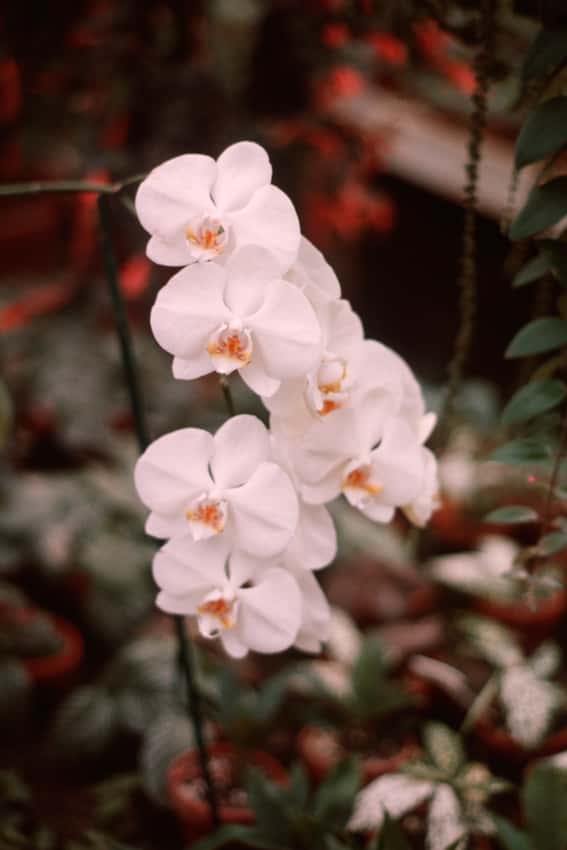
Compact moth orchids carry elegant flower spikes above a small fan of leaves. Colors and patterns change with the assortment, and blooms can last for months. Use orchid bark or moss rather than ordinary potting soil, and let excess water drain away.
At a glance
- Water
- Water when the bark or moss dries
- Life cycle
- Tender indoor flowering orchid
- Bloom
- Long-lasting blooms; color and size vary by selection.
- Light
- Medium–bright filtered light
Sizes & prices
- 2.5"$9.99
Catalog updated September 8, 2026. This is not a live stock count; please call to confirm availability and price.
Ask about this plantSelect a section to expand.
Resistance & tolerances
- Wet soil
- Excess moisture is a common cause of failure.
Pet safety
- Cats & dogs
- Non-toxic according to ASPCA. Chewing any plant may still cause stomach upset.
If a pet eats a potentially toxic plant, contact your veterinarian promptly.
Growing & care
- Growing medium
- Orchid bark or appropriate orchid moss in a draining pot.
- Watering
- Water through the medium, then drain fully; never leave standing in water.
- Repotting
- Replace medium when it breaks down, usually every one to two years.
- Humidity
- Prefers humid air; short misting does not replace proper watering.
- Feeding
- Orchid fertilizer in spring–summer, following its label.
- After flowering
- A healthy green spike may branch if trimmed above a node; remove a fully brown spike at the base. Reblooming depends on light, temperature and plant health.
- Winter
- Keep indoors protected from frost and cold drafts.
Sources & photo credits
Photo: WayneRay · CC BY-SA 4.0

Image notes: Phalaenopsis amabilis. Representative species illustrated: Phalaenopsis amabilis. Actual assortment species, cultivars, and colors vary. Uncropped.
Reviewed September 26, 2026. Growing conditions vary by location.