
Tropicals
Hoya carnosa 'Compacta'
Hindu rope hoya · hanging basket
Also known as: Hindu rope plant · Wax plant
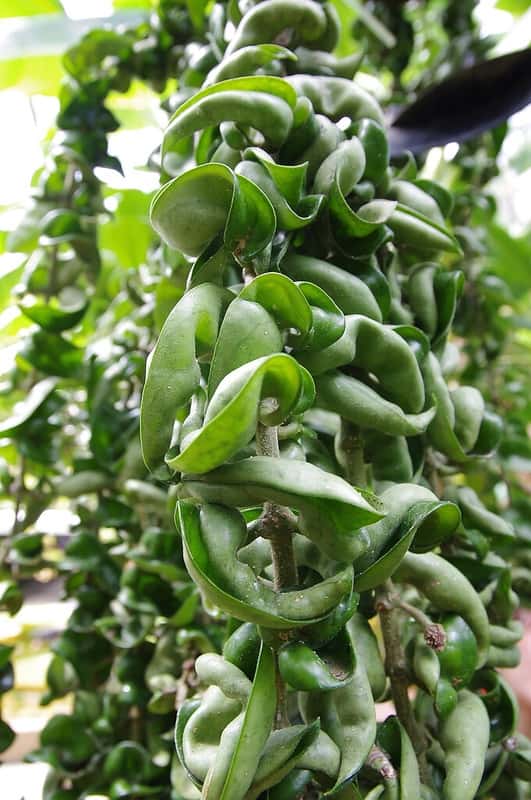
Thick, curled leaves pack closely along trailing stems for a distinctive rope-like appearance. Mature plants may carry fragrant clusters of waxy pink-white flowers. Give this hoya bright filtered light and avoid cutting off its reusable flowering spurs.
At a glance
- Water
- Let the mix dry between waterings
- Life cycle
- Evergreen trailing vine
- Bloom
- Fragrant waxy clusters; usually begins flowering after several years.
- Light
- Bright indirect light
Sizes & prices
- 8" BasketCall for price
Catalog updated September 8, 2026. This is not a live stock count; please call to confirm availability and price.
Ask about this plantSelect a section to expand.
Resistance & tolerances
- Wet soil
- Overwatering can cause leaf loss and root problems.
Pet safety
- Cats & dogs
- Non-toxic according to ASPCA. Chewing any plant may still cause stomach upset.
If a pet eats a potentially toxic plant, contact your veterinarian promptly.
Growing & care
- Soil
- Loose, fast-draining, organic-rich potting mix.
- Humidity
- Prefers humid conditions.
- Pruning
- Trim in early spring if needed; keep old flowering spurs for future blooms.
- Repotting
- Tolerates a snug pot; repot when needed and not in flower.
- Winter
- Bring indoors when nights approach 50°F.
- Pests
- Inspect leaf folds for mealybugs and mites.
- Size & training
- A climbing or trailing hoya: let the stems cascade or train them on a frame. Prune to fit the available space, keeping established flower spurs for repeat bloom.
Sources & photo credits
Image notes: Hoya carnosa 'Compacta'. Available sizes and selections vary. Uncropped.
Reviewed September 26, 2026. Growing conditions vary by location.