
Tropicals
Tillandsia spp.
Air plants in glass globe
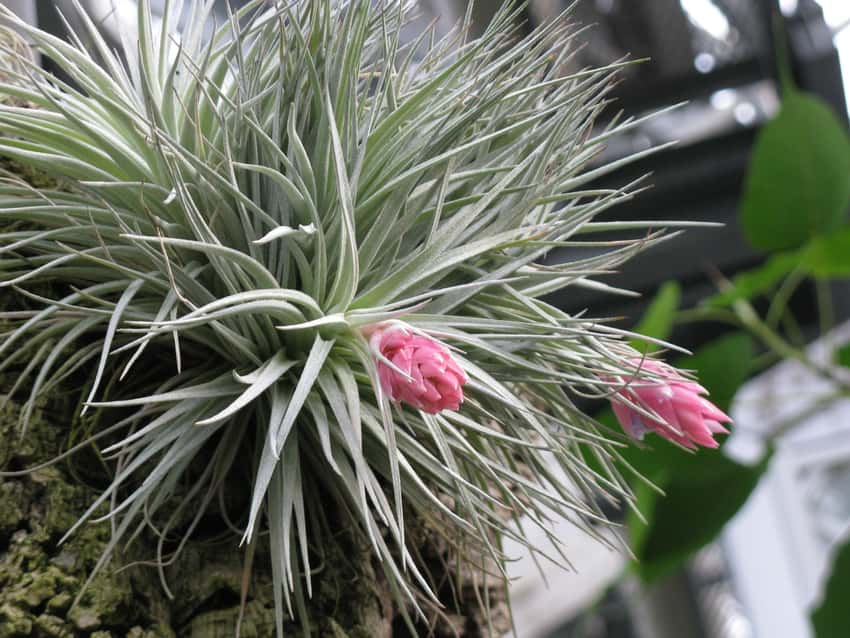
An air-plant arrangement brings sculptural Tillandsia foliage to a glass display. Plants vary in form and size and grow without ordinary potting soil. Keep the glass ventilated and the plants well lit, with regular watering followed by thorough drying.
At a glance
- Water
- Thorough watering, followed by complete drying
- Life cycle
- Tender evergreen air plants
- Bloom
- Colorful blooms vary by species.
- Light
- Very bright indoor light; acclimate to outdoor sun
Sizes & prices
- Sm GlobeCall for price
Catalog updated September 8, 2026. This is not a live stock count; please call to confirm availability and price.
Ask about this plantSelect a section to expand.
Resistance & tolerances
- Wet soil
- Leaves must dry after watering; trapped moisture can cause crown rot.
Pet safety
- Pets
- University of California Extension describes Tillandsia air plants as non-toxic to pets. Keep the plant and its display materials out of chewing reach.
If a pet eats a potentially toxic plant, contact your veterinarian promptly.
Seasonal interest
- Foliage
- Forms and colors vary with the assortment.
Growing & care
- Growing medium
- No potting soil; display on an airy mount.
- Watering
- Water thoroughly at least weekly; adjust to the species and room conditions. Shake out trapped water and let the plant dry before returning it to a holder.
- Glass displays
- Remove for watering; use an open, ventilated display, not a sealed wet container.
- Winter
- Keep indoors away from frost and cold drafts.
- Propagation
- Many selections produce small offsets called pups.
- Display
- Remove accessible plants for watering and let them dry fully before returning to the glass. Do not leave water pooled around their bases.
- Size & display
- Species vary in rosette size and produce offsets. Leave room to grow rather than confining leaves in a sealed globe; remove for watering and complete drying.
Sources & photo credits
University of California Agriculture and Natural Resources
Reviewed September 26, 2026. Growing conditions vary by location.