
Trees
Viburnum rufidulum
Rusty blackhaw viburnum
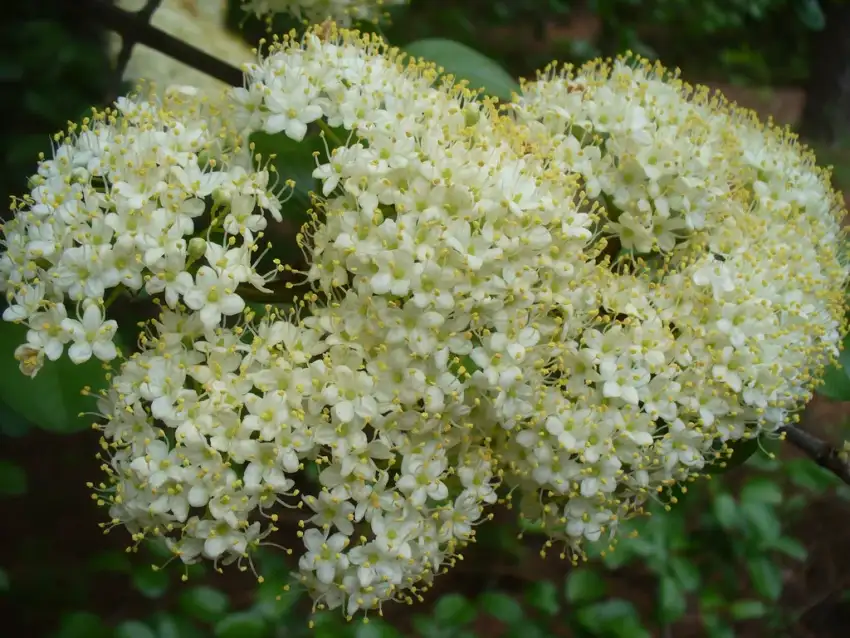
A native large shrub or small tree with white spring flowers, blue fruits and attractive autumn foliage. Rust-colored hairs on young growth and leaf undersides explain its name. Its manageable size suits mixed borders and wildlife plantings; multiple compatible plants improve fruit production.
At a glance
- Sun
- Full sun / Part shade
- Size
- Height: 10 ft.–20 ft. · Width: 10 ft.–20 ft.
- Water
- Moist, well-drained soil
- Hardiness
- USDA zones 5–9
Sizes & prices
- #1$64.99
- #3$29.99
- #5$49.99
Catalog updated September 8, 2026. This is not a live stock count; please call to confirm availability and price.
Ask about this plantSelect a section to expand.
Landscape use & tree form
- Use
- Screening
- Form
- Erect; Oval
- Growth rate
- Slow
- Pollination
- Plant more than one shrub for good fruit production
- Fruit / litter
- Dark blue fruits ripen in fall
- Major issues
- Usually few serious pest or disease problems.
Resistance & tolerances
- Deer
- Listed as resistant; protect young trees from browsing and antler rubbing.
- Drought
- Tolerant once established; water during establishment and prolonged dry spells.
- Wet soil
- Dry to moist loam with good drainage; avoid prolonged saturation.
Resistance is not a guarantee; deer and rabbits may browse any plant.
Pollinators & wildlife
- Attracts
- Pollinators
- Caterpillar host
- Butterflies
- Birds
- Fruit provides food
Native range
- Native range / parentage
- Native to Kentucky and the southeastern United States Species native to Kentucky.
- Tristate native status
- Native to Kentucky and the southeastern United States
Seasonal interest
- Foliage
- Glossy dark green leaves; red, purple and orange autumn color.
Growing & care
- Pruning
- Lightly shape after spring flowering if needed.
- Pollination
- Plant more than one compatible plant for improved fruiting.
- Soil
- Moist, well-drained; brief dry periods tolerated
Sources & photo credits
University of Minnesota Extension
Kew Science, Plants of the World Online
Photo: Susan Strine · CC BY 2.0
Image notes: Rusty blackhaw viburnum. Viburnum rufidulum bloom in spring. Resized and converted to WebP.
Reviewed September 22, 2026. Growing conditions vary by location.