
Trees
Thujopsis dolabrata
Hiba arborvitae
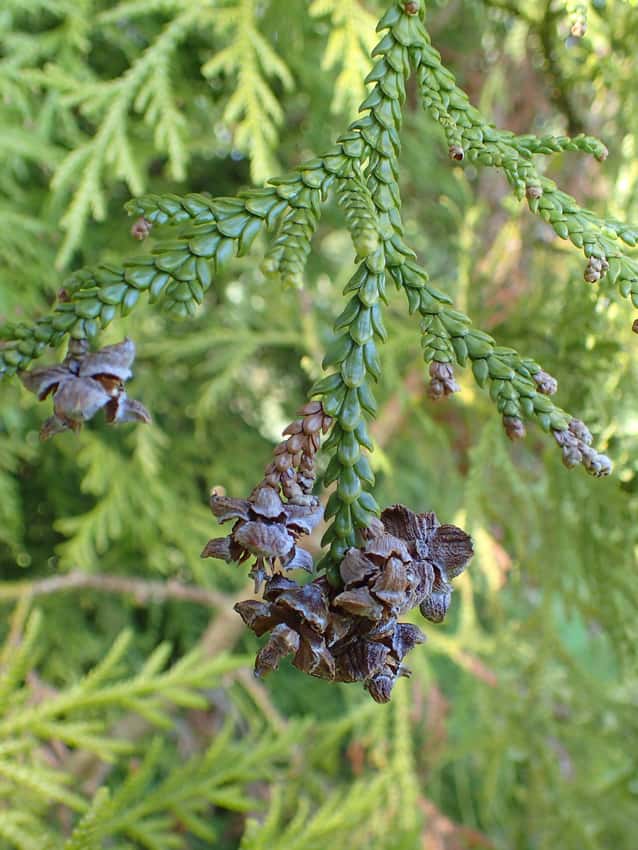
Hiba arborvitae has thick, glossy green foliage with conspicuous pale markings beneath the scale-like leaves. Its dense pyramidal crown and flaking bark create a distinctive evergreen specimen, but cultivated trees still need considerable room. Moist soil and protection from drying exposure are important, especially where summer afternoon heat can stress the foliage.
At a glance
- Sun
- Full sun to partial shade
- Size
- Height: 30–50 ft · Width: 15–25 ft
- Water
- Moist, well-drained soil; avoid dry conditions.
- Hardiness
- USDA zones 5–7
Sizes & prices
- #3$119.99
Catalog updated September 8, 2026. This is not a live stock count; please call to confirm availability and price.
Ask about this plantSelect a section to expand.
Landscape use & tree form
- Form
- Dense conical to pyramidal
- Growth rate
- Slow
- Use
- Large-space evergreen specimen
- Fruit / litter
- Small woody seed cones mature in fall.
- Major issues
- Winter burn and snow/ice breakage can occur; occasional leaf blight, canker and sucking pests.
Resistance & tolerances
- Deer
- Less susceptible to deer browsing than American or oriental arborvitae, according to extension guidance; not deer-proof.
- Drought
- Intolerant
- Wet soil
- Requires moist but well-drained soil.
Resistance is not a guarantee; deer and rabbits may browse any plant.
Seasonal interest
- Foliage
- Evergreen; glossy green with white markings beneath
Growing & care
- Site
- Protect from wind and hot afternoon sun.
- Pruning
- Preserve its naturally dense conical crown; remove damaged or broken branches and avoid unnecessary shearing.
- Siting
- Shelter from drying winds; afternoon shade is helpful in hot-summer locations.
- Soil
- Moist, well-drained, acidic to neutral loam.
Sources & photo credits
University of Minnesota Extension
Photo: Krzysztof Ziarnek, Kenraiz · CC BY-SA 4.0

Reviewed September 22, 2026. Growing conditions vary by location.