
Trees
Thuja koraiensis 'Glauca'
Blue Korean arborvitae
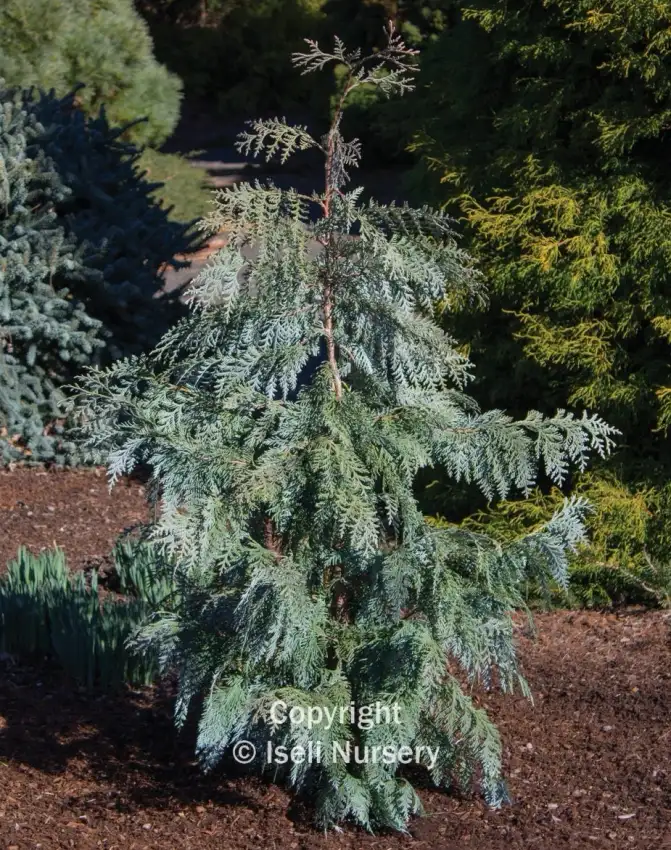
Blue Korean arborvitae is valued for flattened foliage sprays with blue-green upper surfaces and silvery undersides. The color contrast is visible whenever branches turn or move. Published accounts of plants sold under Glauca disagree on whether they remain spreading shrubs or become upright trees, so verify the nursery's clone before planning a size-sensitive location.
At a glance
- Sun
- Full sun to partial shade
- Size
- Height: 0.5–1 m (RHS mature size, 10–20 years) · Width: 1–1.5 m (RHS mature size, 10–20 years)
- Water
- Moist but well-drained soil
- Hardiness
- RHS H6 (−20 to −15°C; UK rating)
Sizes & prices
- #7Call for price
Catalog updated September 8, 2026. This is not a live stock count; please call to confirm availability and price.
Ask about this plantSelect a section to expand.
Landscape use & tree form
- Form
- Low, bushy and spreading
- Use
- Rock garden; groundcover; container
- Growth rate
- Slow compared with western redcedar (species-level observation)
Resistance & tolerances
- Deer
- Deer damage has been documented in Korean arborvitae; protect this cultivar in deer-accessible gardens (species guidance).
- Drought
- The parent species is intolerant of dry conditions; maintain soil moisture during dry spells.
- Wet soil
- Moist soil with good drainage is suitable; avoid waterlogging.
Resistance is not a guarantee; deer and rabbits may browse any plant.
Keep in mind: Conflicting growth habits under this trade label; confirm supplier clone.
Seasonal interest
- Foliage
- Evergreen; blue-green above and silvery beneath
Growing & care
- Pruning
- No routine pruning is required; retain its naturally low, spreading outline.
- Soil
- Moist but well-drained clay, loam or sand; tolerates a range of pH.
- Site
- Choose a sheltered position.
- Issues
- Scale insects, honey fungus, thuja blight and Coryneum canker are possible. Foliage may irritate skin and is harmful if eaten.
- Clone identity
- This name is used for low shrubs and upright forms; ask the nursery to confirm the plant's expected habit before siting.
Sources & photo credits
University of Minnesota Extension
Photo: Photo © Iseli Nursery; photo region cropped from supplier plant sign, embedded copyright retained, no enlargement. · Iseli customer plant-resale promotional photo grant
Reviewed September 22, 2026. Growing conditions vary by location.