
Trees
Stewartia pseudocamellia Koreana Group
Korean stewartia
Also known as: Stewartia koreana
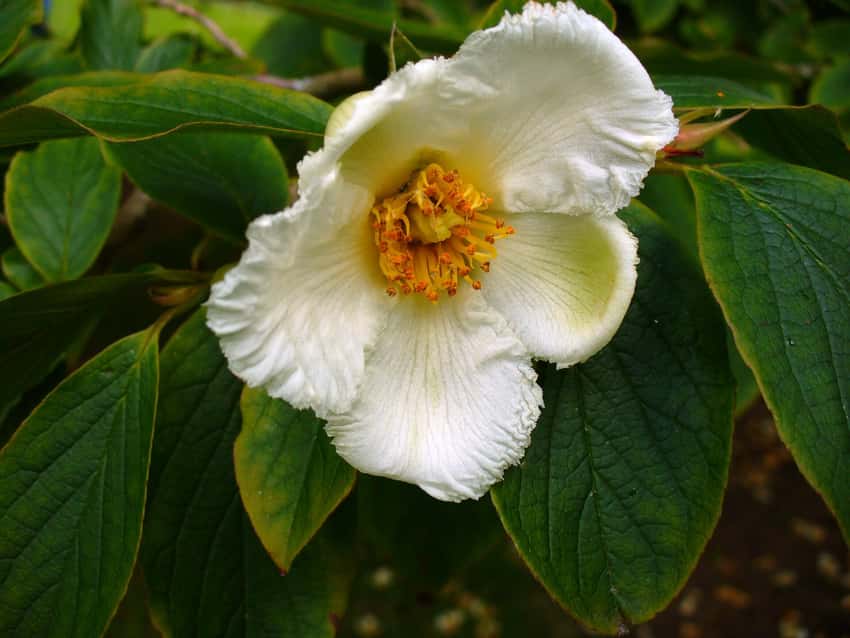
Korean stewartia offers a succession of details worth viewing up close: white, camellia-like flowers in early summer, rich autumn foliage, and mottled peeling bark after leaf fall. Its initially narrow crown broadens as it ages. This is a tree for a sheltered, moisture-retentive garden setting rather than hot, dry or heavily paved conditions.
At a glance
- Sun
- Part shade
- Size
- Height: Up to about 40 ft · Width: About 25 ft
- Water
- Regular moisture; avoid drought
- Hardiness
- USDA 5–8
- Bloom
- White, camellia-like in early summer
Sizes & prices
- B&B 6'Japanese Stewartia$449.99
Catalog updated September 8, 2026. This is not a live stock count; please call to confirm availability and price.
Ask about this plantSelect a section to expand.
Landscape use & tree form
- Use
- Ornamental specimen; Understory planting
- Growth rate
- Slow
- Form
- Ascending; Dense; Erect; Multi-stemmed; Multi-trunked; Open; Oval; Pyramidal
- Fruit / litter
- Small dry woody capsules follow flowers.
- Major issues
- Usually few serious pests; drought, poor soil drainage and root disturbance are important stresses.
Resistance & tolerances
- Deer
- Not reliably deer resistant; protect young plants from browsing.
- Drought
- Drought sensitive; keep the root zone consistently moist.
- Wet soil
- Requires drainage despite its need for moisture.
Resistance is not a guarantee; deer and rabbits may browse any plant.
Pollinators & wildlife
- Attracts
- Bees
Keep in mind: Avoid alkaline, poorly drained or drought-prone sites.
Seasonal interest
- Foliage
- Dark green; red, orange and gold in autumn
- Bark
- Peeling bark exposes tan, pink and gray
Growing & care
- Soil
- Moist, well-drained
- Pruning
- Little routine pruning needed; retain the natural low branching and prune selectively only to reveal bark or remove damaged branches.
Sources & photo credits
Kew Science, Plants of the World Online
University of Minnesota Extension
University of Maryland Extension

Reviewed September 22, 2026. Growing conditions vary by location.