Trees
Quercus palustris
Pin oak
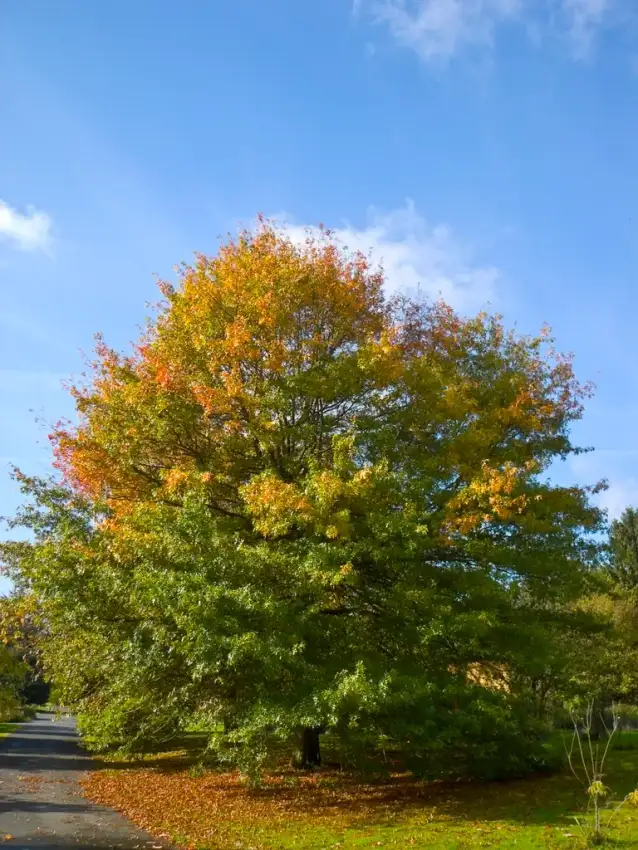
A native oak with a distinctive branching pattern: upper limbs rise while lower limbs often sweep downward. The youthful pyramidal crown broadens with age, and fall foliage can turn bronze or red. Choose acidic soil and an open location with space for its low branches.
At a glance
- Sun
- Full sun / Part shade
- Size
- Height: 50 ft.–70 ft. · Width: 40 ft.–60 ft.
- Water
- Medium to wet, acidic soil; tolerates some flooding
- Hardiness
- USDA zones 4–8
Sizes & prices
- #15Pin OakCall for price
- B&BCall for price
Catalog updated September 8, 2026. This is not a live stock count; please call to confirm availability and price.
Ask about this plantSelect a section to expand.
Landscape use & tree form
- Use
- Shade tree; Ornamental specimen
- Form
- Oval; Pyramidal; Rounded
- Growth rate
- Rapid
- Fruit / litter
- Acorns; allow for seasonal nut and leaf cleanup
- Major issues
- Oak wilt and other regional oak diseases warrant monitoring; avoid unnecessary root or trunk wounds.
Resistance & tolerances
- Deer
- Listed as resistant; protect young trees from browsing and antler rubbing.
- Drought
- Species guidance: occasional dry periods tolerated after establishment, not prolonged drought.
- Wet soil
- Tolerates poorly drained soil and some flooding; not a claim of permanent submersion.
- Heat
- Tolerant.
Resistance is not a guarantee; deer and rabbits may browse any plant.
Pollinators & wildlife
- Caterpillar host
- Butterflies and moths
- Wildlife food
- Nuts for birds
Native range
- Native range / parentage
- Native to Kentucky Species native to Kentucky.
- Tristate native status
- Native to Kentucky
Keep in mind: Acorns and foliage can harm grazing livestock, especially horses; keep animals from consuming them.
Seasonal interest
- Foliage
- Deciduous
Growing & care
- Pruning
- Prune in the cold dormant season and follow local oak-wilt advisories; avoid spring and early-summer wounds.
- Soil
- Prefers medium to wet, acidic loam; tolerates poorly drained soil and some flooding.
Sources & photo credits
University of Minnesota Extension
University of Minnesota Extension
Image notes: Pin oak. Form, in the early fall. Resized and converted to WebP.
Reviewed September 22, 2026. Growing conditions vary by location.