
Trees
Quercus acutissima
Sawtooth oak
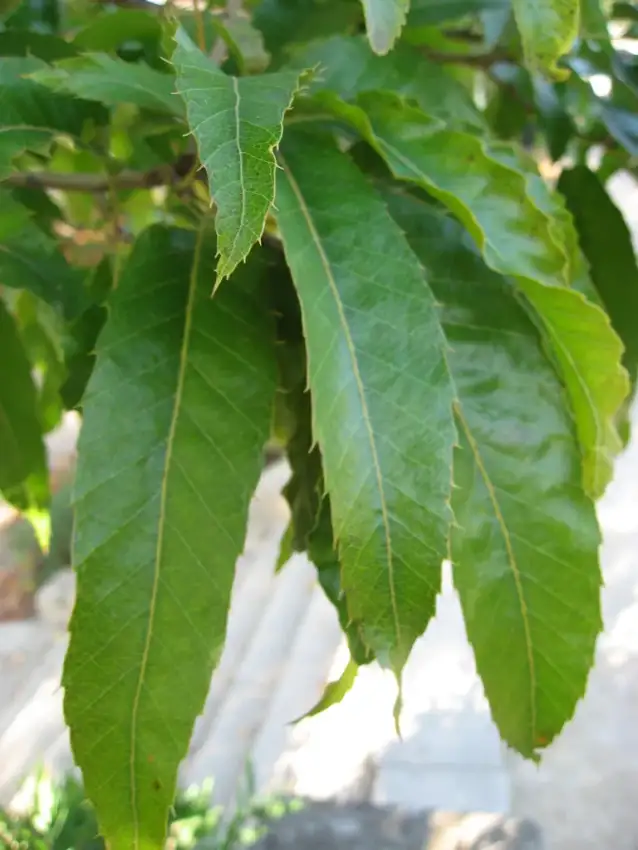
Long, toothed leaves give this Asian oak a different texture from familiar lobed oaks. It develops a broad shade canopy and conspicuous acorns. Allow plenty of room for its branches, and consider seedling spread when placing it near natural woodland or unmanaged ground.
At a glance
- Sun
- Full sun
- Size
- Height: 30 ft.–60 ft. · Width: 30 ft.–50 ft.
- Water
- Moist, well-drained soil
- Hardiness
- USDA zones 6–9
Sizes & prices
- #15Sawtoothed Oak$199.99
Catalog updated September 8, 2026. This is not a live stock count; please call to confirm availability and price.
Ask about this plantSelect a section to expand.
Landscape use & tree form
- Use
- Shade tree
- Form
- Pyramidal; Rounded; Spreading
- Growth rate
- Medium
- Fruit / litter
- Acorns; allow for seasonal nut and leaf cleanup
- Major issues
- Oak wilt and other regional oak diseases warrant monitoring; avoid unnecessary root or trunk wounds.
Resistance & tolerances
- Deer
- Listed as resistant; protect young trees from browsing and antler rubbing.
- Drought
- Tolerant once established; water during establishment and prolonged dry spells.
- Wet soil
- Good drainage is recommended; prolonged saturation tolerance is not established.
- Heat
- Tolerant.
Resistance is not a guarantee; deer and rabbits may browse any plant.
Pollinators & wildlife
- Caterpillar host
- Butterflies and moths
- Wildlife food
- Nuts for birds
Keep in mind: Acorns and foliage can harm grazing livestock, especially horses; keep animals from consuming them.
Seasonal interest
- Foliage
- Deciduous
Growing & care
- Pruning
- Prune in the cold dormant season and follow local oak-wilt advisories; avoid spring and early-summer wounds.
- Soil
- Moist, well-drained; brief dry periods tolerated
Sources & photo credits
University of Minnesota Extension
University of Minnesota Extension
Image notes: Sawtooth oak. Leaves. Resized and converted to WebP.
Reviewed September 22, 2026. Growing conditions vary by location.