
Trees
Pinus thunbergii 'Thunderhead'
Thunderhead Japanese black pine
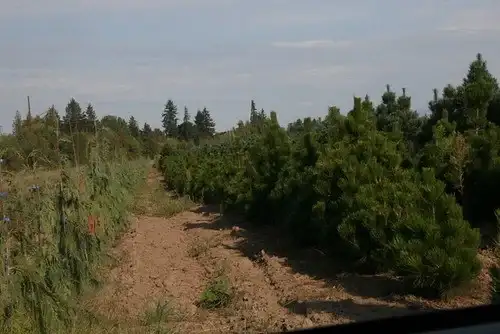
Thunderhead grows into a dense, billowing Japanese black pine with thick glossy green needles. Bright pale buds stand out especially strongly in winter, contrasting with the dark crown. Its rounded masses of foliage can develop into a tree almost as broad as tall, so give the specimen enough surrounding space to show its cloud-like form.
At a glance
- Sun
- Full sun
- Size
- Height: 15 ft, supplier garden size, not ultimate size · Width: 12 ft, supplier garden size
- Water
- Moist, well-drained soil
- Hardiness
- USDA zone 5 minimum
Sizes & prices
- #10Thunderhead Black Pine$299.99
Catalog updated September 8, 2026. This is not a live stock count; please call to confirm availability and price.
Ask about this plantSelect a section to expand.
Landscape use & tree form
- Form
- Broad upright, dense and billowy
- Growth rate
- 6–12 inches/year (grower estimate)
- Use
- Architectural specimen; bold evergreen accent, including coastal gardens.
Resistance & tolerances
- Deer
- Species is listed as deer resistant, not deer-proof.
- Drought
- Species tolerates drought once established.
- Wet soil
- Prefers moist, well-drained soil.
Resistance is not a guarantee; deer and rabbits may browse any plant.
Pollinators & wildlife
- Caterpillar host
- Moths
- Evidence
- Species-level guidance; cultivar habitat value varies.
Seasonal interest
- Foliage
- Evergreen; glossy green with contrasting pale winter buds
Growing & care
- Pruning
- Little routine pruning is needed. For a denser outline, shorten soft new candles before they harden in early summer; do not cut back into bare, needleless wood.
- Soil
- Moist, fertile, well-drained soil; sandy and coastal sites are suitable.
- Issues
- Pine wilt and Diplodia tip blight are potential problems; inspect declining shoots.
Sources & photo credits
University of Minnesota Extension
Photo: MDBolin / Flickr, CC BY-SA 2.0; resized for web. · CC BY-SA 2.0
Image notes: Thunderhead Japanese black pine. Photo: MDBolin / Flickr, CC BY-SA 2.0; resized for web.
Reviewed September 22, 2026. Growing conditions vary by location.