
Trees
Pinus strobus 'Sea Urchin'
Sea Urchin eastern white pine
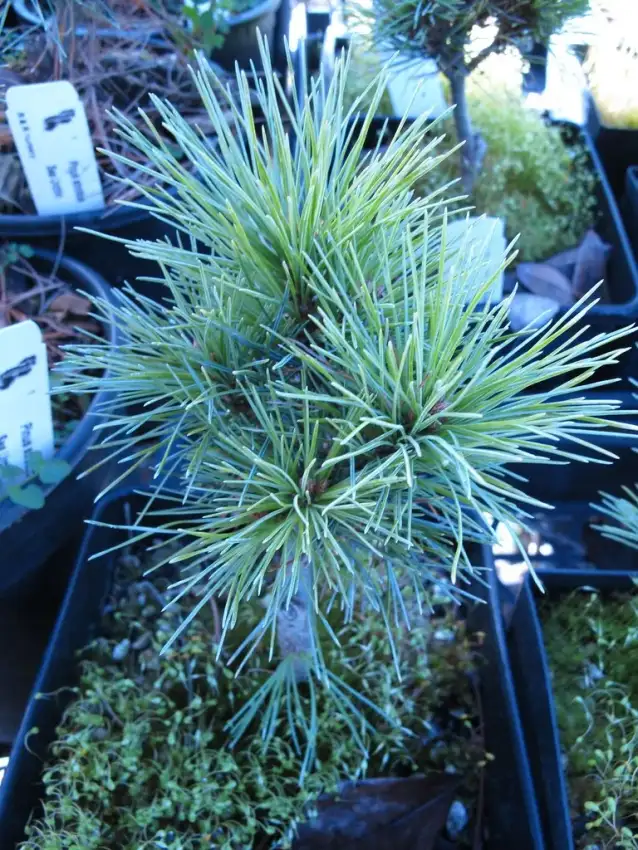
Sea Urchin forms a tiny rounded mound of soft blue-green needles. Its slow growth and finely textured crown make it useful in troughs, containers and rock gardens where larger pines would quickly outgrow their setting. Periodically clearing fallen needles from the dense interior helps keep this miniature specimen clean and accessible to inspection.
At a glance
- Sun
- Full sun
- Size
- Height: 2 ft, supplier garden size, not ultimate size · Width: 2 ft, supplier garden size
- Water
- Moist, well-drained soil
- Hardiness
- USDA zone 3 minimum
Sizes & prices
- #2Call for price
Catalog updated September 8, 2026. This is not a live stock count; please call to confirm availability and price.
Ask about this plantSelect a section to expand.
Landscape use & tree form
- Form
- Small rounded mound
- Growth rate
- 1–3 inches/year (grower estimate)
- Use
- Rock garden; trough or container
Resistance & tolerances
- Deer
- The parent species is listed as deer resistant, but young plants may still be browsed.
- Drought
- Tolerates occasional dryness; maintain moisture through extended dry periods, especially for dwarf or container plants.
- Wet soil
- Prefers moist, well-drained soil.
Resistance is not a guarantee; deer and rabbits may browse any plant.
Pollinators & wildlife
- Caterpillar host
- Moths
- Birds
- Seeds provide food
- Evidence
- Species-level guidance; cultivar habitat value varies.
Native range
- Native range / parentage
- Cultivar of a species native to Central and eastern Canada and the United States. Cultivated selection of a Kentucky-native species; not wild local stock.
- Tristate native status
- Cultivated selection of a Kentucky-native species; not wild local stock.
Seasonal interest
- Foliage
- Evergreen; soft blue-green needles
Growing & care
- Maintenance
- Remove accumulated fallen interior needles annually.
- Pruning
- Little routine pruning is needed. For a denser outline, shorten soft new candles before they harden in early summer; do not cut back into bare, needleless wood.
- Soil
- Acidic, moist, well-drained loam or sand.
- Issues
- Avoid salt, air pollution and alkaline soil. White-pine blister rust, white-pine weevil and wind damage are potential problems.
Sources & photo credits
University of Minnesota Extension
Photo: MeganEHansen / Flickr, CC BY-SA 2.0; resized for web. · CC BY-SA 2.0
Image notes: Sea Urchin eastern white pine. Photo: MeganEHansen / Flickr, CC BY-SA 2.0; resized for web.
Reviewed September 22, 2026. Growing conditions vary by location.