
Trees
Pinus strobus 'Pendula'
Weeping eastern white pine
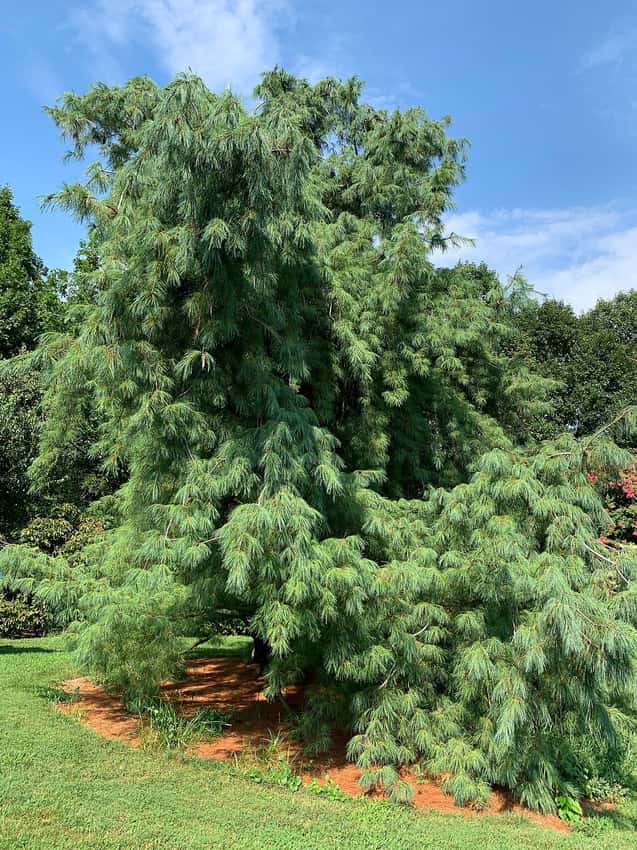
Weeping eastern white pine has long drooping branches and a variable, sometimes multi-stemmed outline. Training a young leader can give it height, while unsupported growth creates a more spreading silhouette. Because plants sold under Pendula are not perfectly uniform, select the individual specimen for its structure instead of expecting a rigidly standardized mature shape.
At a glance
- Sun
- Full sun
- Size
- Height: 6–16 ft, depending on training; may continue growing · Width: 10–20 ft, depending on training and age
- Water
- Moist, well-drained soil
- Hardiness
- USDA zone 3 minimum
Sizes & prices
- #5Call for price
Catalog updated September 8, 2026. This is not a live stock count; please call to confirm availability and price.
Ask about this plantSelect a section to expand.
Landscape use & tree form
- Form
- Weeping, sometimes multi-stemmed; varies by plant
- Use
- Weeping specimen or cascading accent; train while young to set its outline.
- Growth rate
- Medium; leader shoots may extend 12–18 inches/year
Resistance & tolerances
- Deer
- The parent species is listed as deer resistant, but young plants may still be browsed.
- Drought
- Tolerates occasional dryness; maintain moisture through extended dry periods, especially for dwarf or container plants.
- Wet soil
- Prefers moist, well-drained soil.
Resistance is not a guarantee; deer and rabbits may browse any plant.
Pollinators & wildlife
- Caterpillar host
- Moths
- Birds
- Seeds provide food
- Evidence
- Species-level guidance; cultivar habitat value varies.
Native range
- Native range / parentage
- Cultivar of a species native to Central and eastern Canada and the United States. Cultivated selection of a Kentucky-native species; not wild local stock.
- Tristate native status
- Cultivated selection of a Kentucky-native species; not wild local stock.
Seasonal interest
- Foliage
- Evergreen
- Cones
- Elongated cones can create litter around the tree.
Growing & care
- Pruning
- Train a leader while young if an upright specimen is wanted. Little routine pruning is needed. For a denser outline, shorten soft new candles before they harden in early summer; do not cut back into bare, needleless wood.
- Training
- Train while young if an upright leader is desired.
- Soil
- Acidic, moist, well-drained loam or sand.
- Issues
- Avoid salt, air pollution and alkaline soil. White-pine blister rust, white-pine weevil and wind damage are potential problems.
Sources & photo credits
Photo: KATHERINE WAGNER-REISS / Wikimedia Commons · CC BY-SA 4.0

Reviewed September 22, 2026. Growing conditions vary by location.