
Trees
Pinus sylvestris 'Globosa'
Globosa Scots pine
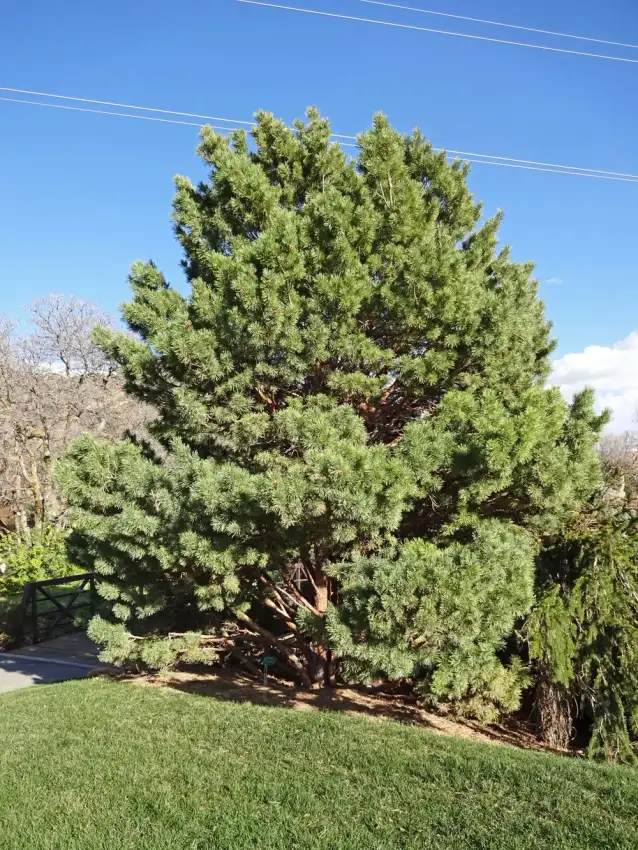
Globosa is a compact, slow-growing Scots pine that forms a rounded mass of short, slightly twisted dark green needles. Its dense evergreen outline suits a sunny border or a small specimen planting. Oval grey to reddish-brown cones may remain on the branches for several years, adding texture without distracting from the plant's rounded shape.
At a glance
- Sun
- Full sun
- Size
- Height: About 5–8 ft over 20–50 years · Width: About 5–8 ft over the same period
- Water
- Average
- Hardiness
- USDA zones 2–7
Sizes & prices
- #2Globe White PineCall for price
Catalog updated September 8, 2026. This is not a live stock count; please call to confirm availability and price.
Ask about this plantSelect a section to expand.
Landscape use & tree form
- Form
- Compact rounded
- Growth rate
- Slow
- Use
- Rounded evergreen accent; small-garden specimen.
Resistance & tolerances
- Deer
- Generally less favored by deer; not deer-proof.
- Drought
- Drought resistant
- Wet soil
- Avoid waterlogged soil.
Resistance is not a guarantee; deer and rabbits may browse any plant.
Pollinators & wildlife
- Caterpillar host
- Moths
- Evidence
- Species-level guidance; cultivar habitat value varies.
Seasonal interest
- Foliage
- Evergreen; dark green
Growing & care
- Soil
- Well-drained, preferably acidic soil; tolerates poor soil.
- Pruning
- No routine pruning required Little routine pruning is needed. For a denser outline, shorten soft new candles before they harden in early summer; do not cut back into bare, needleless wood.
- Issues
- Pine wilt, tip blight and sawflies can be serious; the species performs poorly in prolonged southern heat and humidity.
Sources & photo credits
Photo: Andrey Zharkikh / Flickr, CC BY 2.0; resized for web without enlargement. · CC BY 2.0
Image notes: Mature Globosa Scots pine growing at Red Butte Garden; not current Reminiscent stock. Photo: Andrey Zharkikh / Flickr, CC BY 2.0; resized for web without enlargement.
Reviewed September 22, 2026. Growing conditions vary by location.