Trees
Pinus resinosa
Red pine
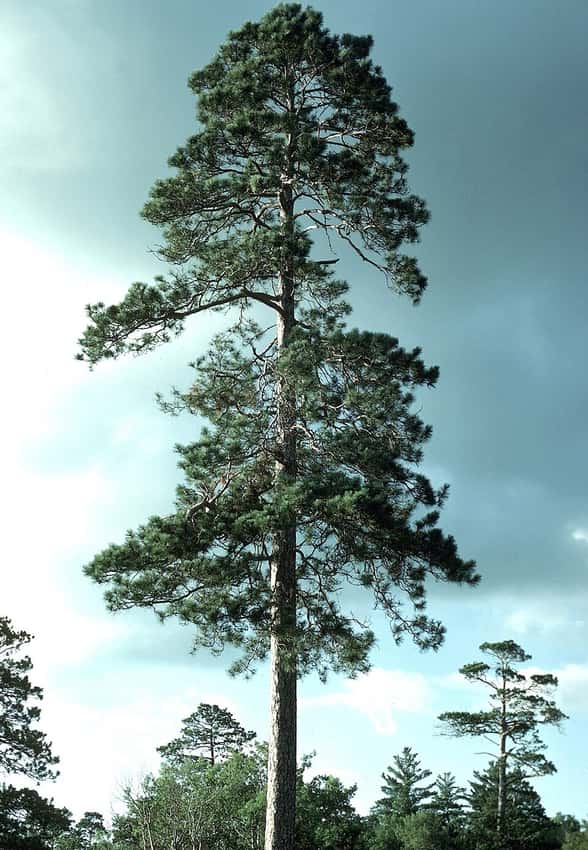
Red pine is an evergreen tree with long needles held in pairs and a broad pyramidal crown. Strong spreading branches may become somewhat pendulous, while the red-brown bark develops shallow fissures and scales. Native to northeastern North America, it is a hardy tree for larger compositions where its open branching and textured trunk have room to mature.
At a glance
- Sun
- Sun to partial shade
- Size
- Height: 50–80 ft (typical landscape range) · Width: 20–30 ft
- Water
- Moderate moisture; well-drained sandy soil
- Hardiness
- USDA zones 3–7
Sizes & prices
- #2Red Pine Bonsai Starter$24.99
Catalog updated September 8, 2026. This is not a live stock count; please call to confirm availability and price.
Ask about this plantSelect a section to expand.
Landscape use & tree form
- Form
- Broad pyramidal crown with spreading branches
- Growth rate
- Moderate to fast, depending on site
- Use
- Windbreak; erosion control; large landscape or park specimen.
Resistance & tolerances
- Deer
- Listed among plants less favored by deer; not deer-proof.
- Drought
- Tolerates drought after establishment.
- Wet soil
- Good drainage is important; avoid waterlogged sites.
Resistance is not a guarantee; deer and rabbits may browse any plant.
Native range
- Native range / parentage
- Native to northeastern North America
Seasonal interest
- Foliage
- Evergreen; long paired needles
- Cones
- Light-brown cones about 2–3 in long.
Growing & care
- Pruning
- Little routine pruning is needed. For a denser outline, shorten soft new candles before they harden in early summer; do not cut back into bare, needleless wood.
- Soil
- Acidic, sandy, well-drained soil; adapts to dry sites.
- Issues
- Needle cast, Scleroderris canker, root rot, sawflies and borers can be serious. Morton advises against planting this species in the Midwest because of pest and disease susceptibility.
Sources & photo credits
University of Minnesota Extension
Photo: Joseph O'Brien, USDA Forest Service · CC BY 3.0 US

Image notes: Mature red pine at Itasca State Park, Minnesota. Photo: Joseph O'Brien, USDA Forest Service / Wikimedia Commons, CC BY 3.0 US. Wikimedia 960 px thumbnail; no other edits. photograph, not current inventory.
Reviewed September 22, 2026. Growing conditions vary by location.