
Trees
Picea orientalis 'Atrovirens'
Atrovirens oriental spruce
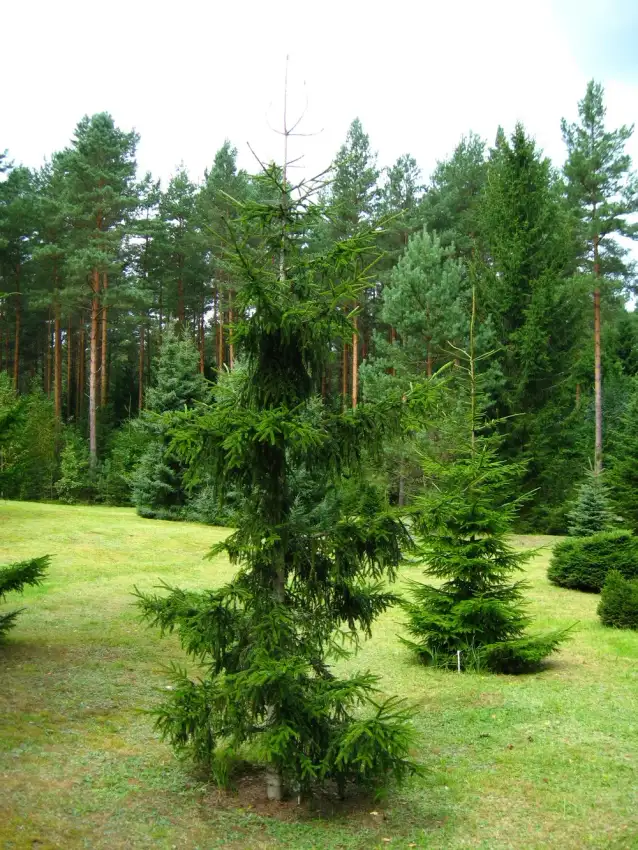
Atrovirens is an oriental spruce selected for especially dark green needles. Its general character resembles the species, though documented specimens grow less vigorously than ordinary oriental spruce. This is still a tree-form conifer rather than a dwarf shrub, with the rich foliage color providing its principal distinction in a permanent evergreen planting.
At a glance
- Sun
- Full sun
- Size
- Height: To 60 ft · Width: 15–20 ft (cultivar grower estimate)
- Water
- Moist, well-drained soil; tolerates occasional dryness
- Hardiness
- USDA zone 4 minimum
Sizes & prices
- #15$289.99
Catalog updated September 8, 2026. This is not a live stock count; please call to confirm availability and price.
Ask about this plantSelect a section to expand.
Landscape use & tree form
- Form
- Conical crown; branches densely to ground
- Use
- Dark evergreen specimen or screen with room for branches to reach the ground.
- Growth rate
- Moderate
Resistance & tolerances
- Deer
- Spruces are generally less favored by deer; browsing remains possible.
- Drought
- Species tolerates occasional dryness; prefers moist, well-drained soil.
- Wet soil
- Moist soil is suitable, but provide good drainage.
Resistance is not a guarantee; deer and rabbits may browse any plant.
Seasonal interest
- Foliage
- Evergreen; especially dark green needles
Growing & care
- Pruning
- Preserve the leader and natural branching. If shortening is necessary, cut younger portions of branches in early spring; avoid bare old wood.
- Siting
- Protect from harsh winter winds.
- Soil
- Moist, well-drained soil; tolerates gravelly soil.
- Issues
- Heat and humidity can stress this species; monitor mites, bagworms, needle cast and canker.
Sources & photo credits
University of Minnesota Extension
Photo: Athantor / Wikimedia Commons, CC BY-SA 4.0; resized for web. · CC BY-SA 4.0
Image notes: Atrovirens oriental spruce. Photo: Athantor / Wikimedia Commons, CC BY-SA 4.0; resized for web.
Reviewed September 22, 2026. Growing conditions vary by location.