Trees
Picea glauca 'Conica'
Dwarf Alberta spruce
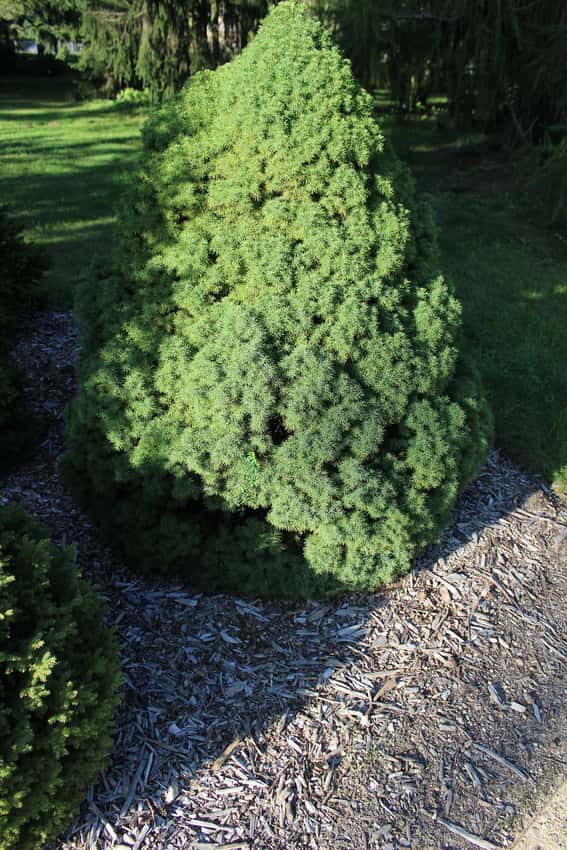
Conica forms a dense, symmetrical cone covered in fine green needles. Its slow growth and compact early size make it useful near entrances, in containers or as a small formal accent. Consistent moisture supports healthy foliage, and gardeners can shape it for topiary when a sculpted silhouette is preferred over its natural outline.
At a glance
- Sun
- Full sun
- Size
- Height: 6 ft, supplier garden size, not ultimate size · Width: 3 ft, supplier garden size
- Water
- Moist, well-drained soil
- Hardiness
- USDA zone 4 minimum
Sizes & prices
- #2$39.99
- #3$59.99
- #7Super blue, classic conical dwarf form - Alberta Spruce$114.99
Catalog updated September 8, 2026. This is not a live stock count; please call to confirm availability and price.
Ask about this plantSelect a section to expand.
Landscape use & tree form
- Form
- Dense, narrow conical
- Growth rate
- 3–6 inches/year (grower estimate)
- Use
- Entry accent; container; topiary
Resistance & tolerances
- Deer
- Browsing can occur in winter, despite the species being listed as resistant.
- Drought
- The species is relatively drought tolerant for a spruce after establishment; maintain moisture for dwarf forms and young plants.
- Wet soil
- Good drainage required.
Resistance is not a guarantee; deer and rabbits may browse any plant.
Pollinators & wildlife
- Wildlife food
- Foliage for grouse and browsing mammals
- Evidence
- Species-level guidance; cultivar habitat value varies.
Native range
- Native range / parentage
- Cultivar of a species native to Canada and the northern United States.
Seasonal interest
- Foliage
- Evergreen; fine green needles
Growing & care
- Pruning
- Preserve the leader and natural branching. If shortening is necessary, cut younger portions of branches in early spring; avoid bare old wood.
- Water
- Maintain consistent soil moisture.
- Soil
- Moderately moist, well-drained soil; provide air circulation.
- Site
- Best in cool climates; heat and humidity increase stress.
- Issues
- Spider mites are a particular concern during dry weather; needle rust, canker and root rot can occur.
Sources & photo credits
Photo: Aleksandrs Balodis / Wikimedia Commons · CC BY-SA 4.0

Reviewed September 22, 2026. Growing conditions vary by location.