
Trees
Parrotia persica
Persian ironwood
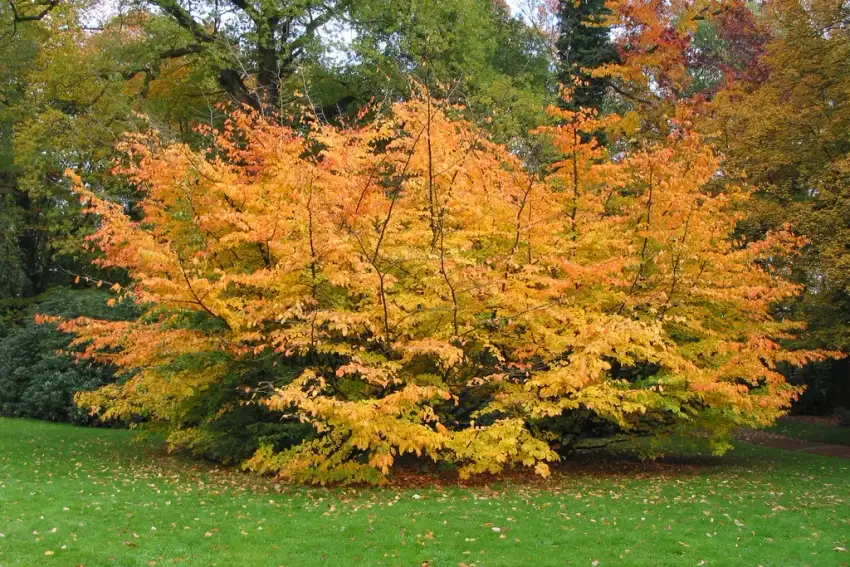
A spreading tree with attractive bark and a long season of foliage interest. Autumn leaves can develop a mix of yellow, orange and red, while small red flowers appear before the leaves. Use it as a specimen where the branching structure and changing bark remain visible.
At a glance
- Sun
- Full sun / Part shade
- Size
- Height: 15 ft.–30 ft. · Width: 15 ft.–30 ft.
- Water
- Moist, well-drained soil
- Hardiness
- USDA zones 4–7
Sizes & prices
- #20$249.99
Catalog updated September 8, 2026. This is not a live stock count; please call to confirm availability and price.
Ask about this plantSelect a section to expand.
Landscape use & tree form
- Use
- Ornamental specimen
- Form
- Multi-stemmed; Rounded; Vase
- Growth rate
- Slow
- Major issues
- Generally few serious insect or disease problems.
- Fruit / litter
- Small woody capsules; ornamental value is mainly foliage and bark.
Resistance & tolerances
- Deer
- Species reported deer resistant; protect young trees.
- Drought
- Tolerant once established; water during establishment and prolonged dry spells.
- Wet soil
- Use moist, well-drained soil; no prolonged waterlogging.
- Heat
- Tolerant.
Resistance is not a guarantee; deer and rabbits may browse any plant.
Seasonal interest
- Foliage
- Deciduous
Growing & care
- Pruning
- Prune lightly to retain the natural trunk arrangement and expose ornamental bark; avoid routine hard cutting.
Sources & photo credits
University of Minnesota Extension
Photo: Jean-Pol GRANDMONT · CC BY-SA 3.0
Image notes: Persian ironwood. Form. Resized and converted to WebP.
Reviewed September 22, 2026. Growing conditions vary by location.