
Trees
Malus 'Spring Snow'
Spring Snow crabapple
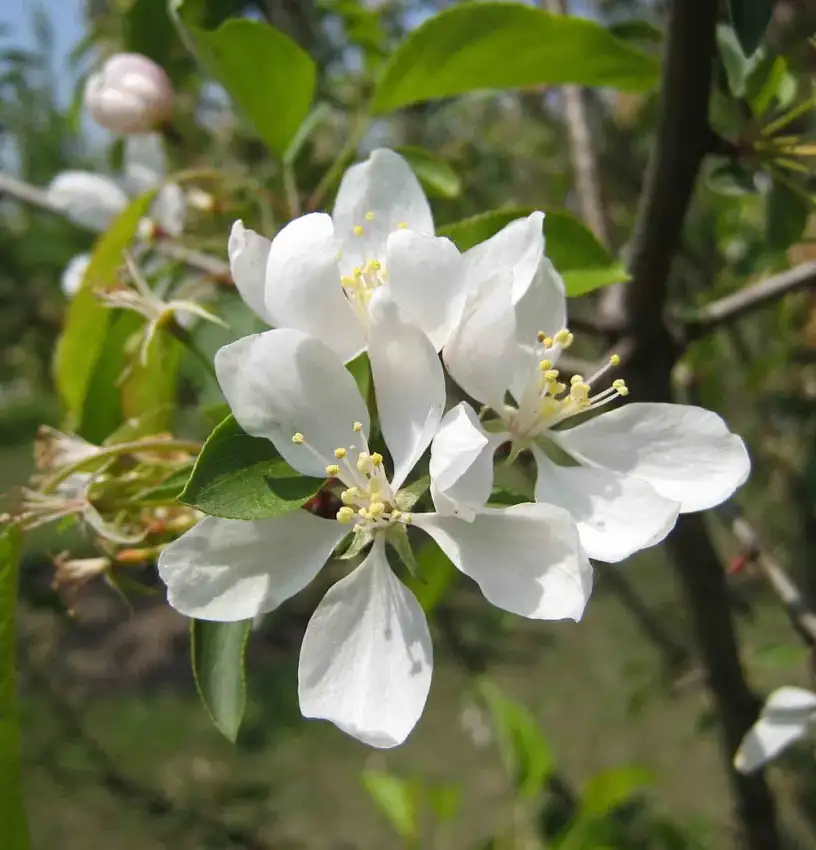
Spring Snow offers a dense oval canopy covered with fragrant white flowers in spring. Green leaves follow the bloom, while its nearly sterile character usually limits fruit litter around patios and paths. It should not be chosen solely for convenience, however, because its comparatively weak apple-scab resistance matters in disease-prone climates.
At a glance
- Sun
- Full sun
- Size
- Height: 25 ft · Width: 22 ft
- Water
- Moist, well-drained soil
- Hardiness
- USDA zone 4 minimum
- Bloom
- Fragrant white, spring
Sizes & prices
- #25Heavily bloomed crabapple resistant to blightCall for price
Catalog updated September 8, 2026. This is not a live stock count; please call to confirm availability and price.
Ask about this plantSelect a section to expand.
Landscape use & tree form
- Use
- Ornamental flowering specimen
- Form
- Dense oval
- Fruit / litter
- Fruitless cultivar
- Major issues
- Susceptible to apple scab; also monitor for fire blight and other crabapple diseases.
- Growth rate
- Moderate
Resistance & tolerances
- Deer
- Crabapples can sustain substantial browsing; protect young plants.
- Drought
- Moderate tolerance once established.
- Wet soil
- Occasional wet periods tolerated, but provide good drainage rather than continuous saturation.
Resistance is not a guarantee; deer and rabbits may browse any plant.
Pollinators & wildlife
- Flower resources
- Pollen and nectar
Keep in mind: Supplier rates apple-scab resistance poor; nearly sterile does not guarantee absolutely no fruit.
Seasonal interest
- Foliage
- Green leaves; deciduous.
Growing & care
- Pruning
- Prune during dormancy to improve branch spacing and air movement; remove suckers and water sprouts. Avoid pruning during active fire-blight conditions.
- Soil
- Fertile, moist, well-drained soil; allow good air circulation.
Sources & photo credits
University of Minnesota Extension

Image notes: Spring Snow crabapple photographed by 阿橋 HQ; resized from the original under CC BY-SA 2.0.
Reviewed September 22, 2026. Growing conditions vary by location.