
Trees
Magnolia virginiana var. australis
Southern sweetbay magnolia
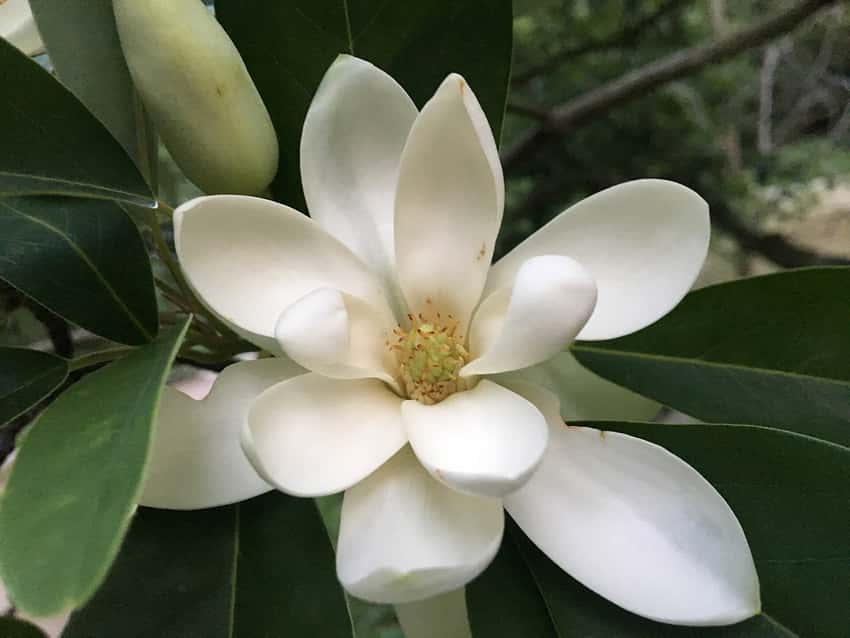
Southern sweetbay is the southern form of sweetbay magnolia, generally developing a more tree-like habit and retaining foliage more persistently than northern forms. Fragrant white flowers and silvery leaf undersides give it ornamental value. Final size and winter leaf retention vary with climate, so judge it by local mature specimens.
At a glance
- Sun
- Full sun to part shade
- Size
- Height: About 30 ft in the Kentucky landscape guide; 15–60 ft across the broader published range. · Width: About 20 ft in the Kentucky landscape guide; broader references allow 15–60 ft with age and climate.
- Water
- Consistently moist to wet soil
- Hardiness
- USDA zones 5–10; choose a protected position in zone 5.
- Bloom
- Fragrant white; late spring, with occasional summer blooms
Sizes & prices
- #15Sweet Bay Magnolia EvergreenCall for price
Catalog updated September 8, 2026. This is not a live stock count; please call to confirm availability and price.
Ask about this plantSelect a section to expand.
Landscape use & tree form
- Use
- Ornamental specimen
- Growth rate
- Rapid
- Form
- Columnar; Conical; Multi-stemmed; Open; Pyramidal; Rounded; Spreading; Vase
- Fruit / litter
- Cone-like fruits open to show red seeds; fruit and seasonal leaves fall.
- Major issues
- Chlorosis in alkaline soil; occasional scale and leaf spots.
Resistance & tolerances
- Deer
- Some browsing resistance; not deer-proof. Protect young plants.
- Drought
- Generally drought sensitive; irrigate dry spells even though established plants show some adaptability.
- Wet soil
- Tolerates consistently wet and swampy soils.
Resistance is not a guarantee; deer and rabbits may browse any plant.
Pollinators & wildlife
- Caterpillar host
- Swallowtail
Native range
- Native range / parentage
- Species native to eastern United States to Cuba.
Seasonal interest
- Foliage
- More persistently evergreen southern form
Growing & care
- Site
- Prefers acidic soil; unlike many magnolias, tolerates wet ground.
- Pruning
- Usually needs little pruning. For deciduous trees, make necessary shaping cuts in summer; avoid major winter or early-spring cuts.
- Soil
- Consistently moist to wet, acidic, organic-rich soil; alkaline soil may cause chlorosis.
Sources & photo credits
USDA Natural Resources Conservation Service
Kew Science, Plants of the World Online
University of Minnesota Extension
nursery-crop-extension.mgcafe.uky.edu
Photo: Plant Image Library · CC BY-SA 2.0

Reviewed September 22, 2026. Growing conditions vary by location.