
Trees
Magnolia acuminata
Cucumber magnolia
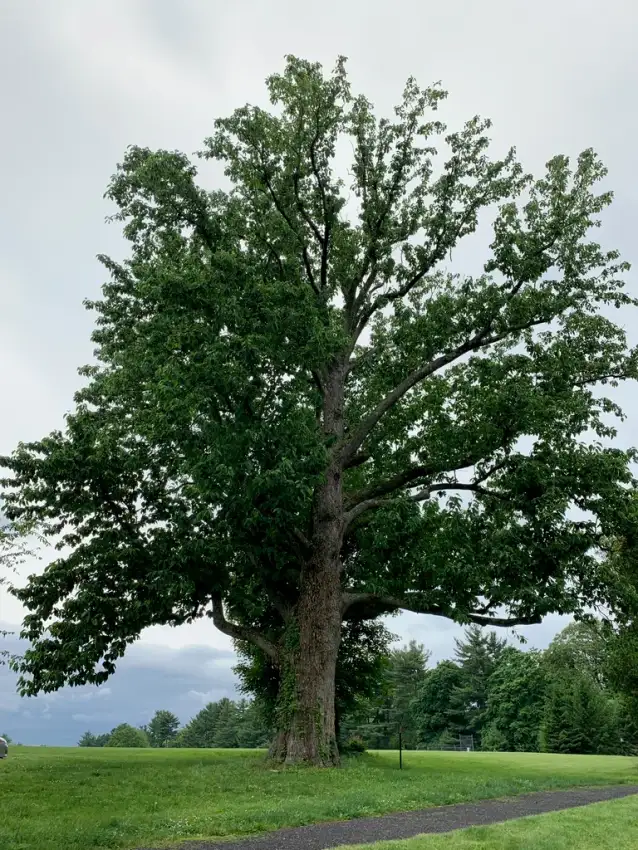
Cucumber magnolia is a large deciduous North American tree, better suited to spacious grounds than a small front garden. Its greenish-yellow spring flowers are relatively discreet among the leaves. Developing cone-like fruits give the species its common name, while the broad mature canopy contributes shade and substantial landscape structure.
At a glance
- Sun
- Full sun to partial shade
- Size
- Height: 50–80 ft · Width: 35–60 ft
- Water
- Moist, well-drained soil
- Hardiness
- USDA 4–8
- Bloom
- Greenish-yellow, late spring
Sizes & prices
- #35Call for price
Catalog updated September 8, 2026. This is not a live stock count; please call to confirm availability and price.
Ask about this plantSelect a section to expand.
Landscape use & tree form
- Use
- Large landscape specimen
- Form
- Pyramidal, becoming rounded and spreading
- Growth rate
- Moderate
- Fruit / litter
- Cucumber-like cones ripen red, then brown, releasing red-coated seeds.
- Major issues
- Magnolia scale can occur; protect bark from mowers.
Resistance & tolerances
- Deer
- Some resistance reported, but deer browse buds and twigs.
- Drought
- Sensitive to heat and drought.
- Wet soil
- Needs moisture with drainage; not a standing-water planting.
Resistance is not a guarantee; deer and rabbits may browse any plant.
Pollinators & wildlife
- Birds
- Seeds provide food
Native range
- Native range / parentage
- Native to eastern North America. Species native to Kentucky.
- Tristate native status
- Species native to Kentucky.
Seasonal interest
- Foliage
- Large green leaves; deciduous.
Growing & care
- Pruning
- Usually needs little pruning. For deciduous trees, make necessary shaping cuts in summer; avoid major winter or early-spring cuts.
- Soil
- Rich, moist, well-drained soil; avoid compaction.
Sources & photo credits
University of Minnesota Extension
Photo: KATHERINE WAGNER-REISS / NC State Extension, CC BY-SA 4.0 · CC BY-SA 4.0
Image notes: Cucumber magnolia, photograph; seasonal appearance varies. Resized and converted to WebP.
Reviewed September 22, 2026. Growing conditions vary by location.