
Trees
Liriodendron tulipifera
Tulip tree
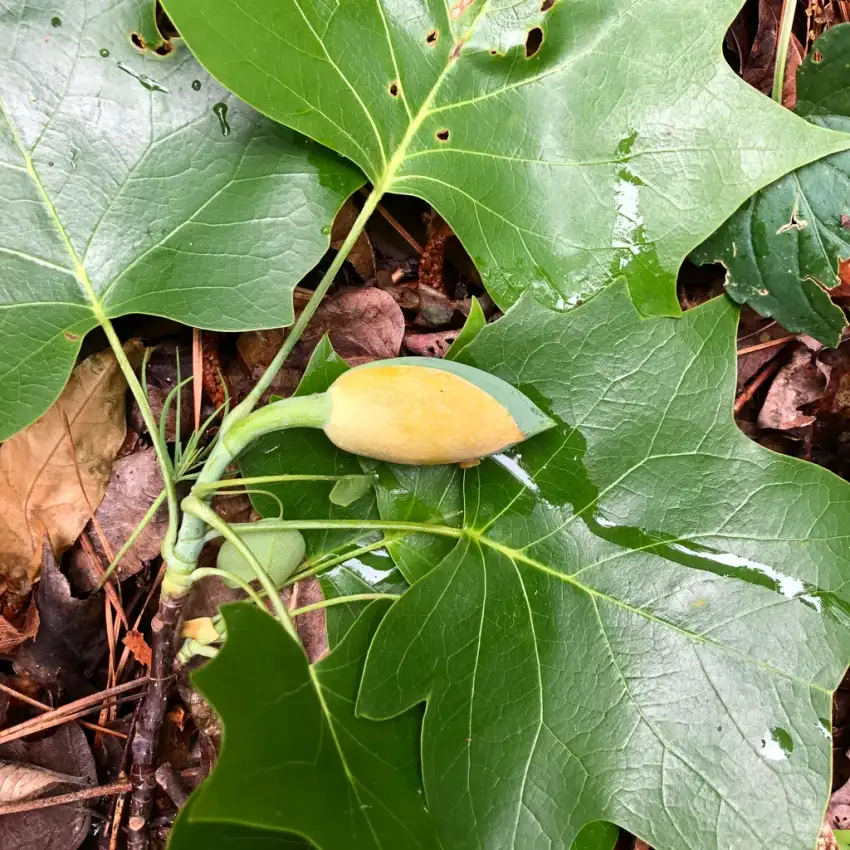
A large native canopy tree with distinctive four-lobed leaves, greenish-yellow tulip-shaped flowers and golden fall color. Mature trees need considerable space above and below ground. Best suited to broad lawns or woodland settings, where its height and wildlife value can be appreciated.
At a glance
- Sun
- Full sun
- Size
- Height: 80 ft.–120 ft. · Width: 30 ft.–60 ft.
- Water
- Moist, well-drained soil
- Hardiness
- USDA zones 4–9
Sizes & prices
- #7$134.99
- #15Tulip Poplar$189.99
Catalog updated September 8, 2026. This is not a live stock count; please call to confirm availability and price.
Ask about this plantSelect a section to expand.
Landscape use & tree form
- Use
- Shade tree; Ornamental specimen
- Form
- Oval; Pyramidal; Rounded
- Growth rate
- Rapid
- Major issues
- Aphid honeydew, scale and Verticillium wilt may occur; branches can break in strong wind or ice.
- Fruit / litter
- Cone-like clusters release winged seeds; leaves, flowers and twigs also fall.
Resistance & tolerances
- Deer
- Listed as resistant; protect young trees from browsing and antler rubbing.
- Drought
- Sensitive to drought and heat; dry summers can cause yellowing and premature leaf drop.
- Wet soil
- Tolerates occasional wetness; this does not imply permanent flooding tolerance.
Resistance is not a guarantee; deer and rabbits may browse any plant.
Pollinators & wildlife
- Attracts
- Butterflies, Hummingbirds
Native range
- Native range / parentage
- Southern Ontario to North Central and Eastern United States Species native to Kentucky.
- Tristate native status
- Species native to Kentucky.
Seasonal interest
- Foliage
- Deciduous
Growing & care
- Pruning
- Establish one strong leader and well-spaced scaffold branches while young; assess weak or damaged limbs after storms.
- Soil
- Moist, well-drained; brief dry periods tolerated
Sources & photo credits
University of Minnesota Extension
Photo: Cathy Dewitt · CC BY 4.0
Image notes: Tulip tree. Leafy shoot with fat, terminal flower bud. Resized and converted to WebP.
Reviewed September 22, 2026. Growing conditions vary by location.