
Trees
Lagerstroemia indica 'Whit II'
Dynamite crape myrtle
Also known as: Whit II
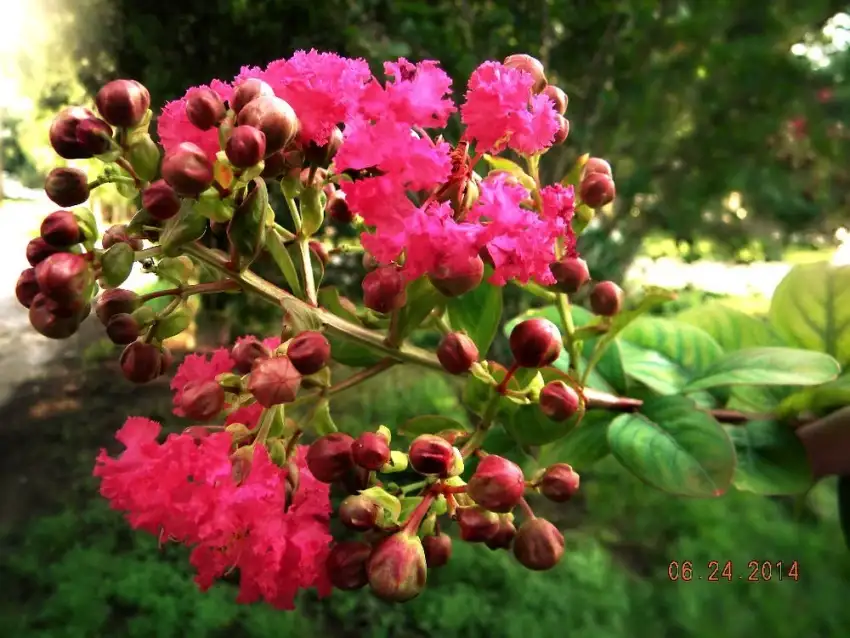
Dynamite is grown for vivid red flower clusters that enliven the summer garden. Its upright deciduous framework carries green foliage that changes to orange and red in autumn, while peeling bark adds texture beyond the flowering season. Give it a sunny position and enough space to develop its natural branching shape.
At a glance
- Sun
- Full sun
- Size
- Height: 15–20 ft · Width: 10–15 ft
- Water
- Water deeply when soil becomes dry
- Hardiness
- USDA 6–10
- Bloom
- Red in summer
Sizes & prices
- #10Crape Myrtle Dynamite$59.99
Catalog updated September 8, 2026. This is not a live stock count; please call to confirm availability and price.
Ask about this plantSelect a section to expand.
Landscape use & tree form
- Use
- Ornamental specimen; flowering screen
- Form
- Upright
- Growth rate
- Moderate
- Major issues
- Watch for powdery mildew, aphids, sooty mold and crape myrtle bark scale.
- Fruit / litter
- Small dry capsules persist after flowers; bark exfoliation is normal.
Resistance & tolerances
- Deer
- Usually little browsing damage; not deer-proof.
- Drought
- Species tolerates drought once established.
- Wet soil
- Occasional wetness tolerated; provide drainage rather than permanent saturation.
Resistance is not a guarantee; deer and rabbits may browse any plant.
Pollinators & wildlife
- Attracts
- Pollinators
Seasonal interest
- Foliage
- Green; orange-red in fall
- Bark
- Smooth, peeling bark
Growing & care
- Soil
- Moist, well-drained soil; full sun and airflow support flowering.
- Pruning
- Avoid topping. If needed, thin selected stems in late winter before new flowering wood develops.
Sources & photo credits
University of Maryland Extension
Photo: Coastal Sea'Chelle / Flickr, CC BY-SA 2.0; resized for web. · CC BY-SA 2.0
Image notes: Dynamite crape myrtle. Photo: Coastal Sea'Chelle / Flickr, CC BY-SA 2.0; resized for web.
Reviewed September 22, 2026. Growing conditions vary by location.