
Trees
Hydrangea paniculata 'Interhydia' (standard form)
Pink Diamond hydrangea standard
Also known as: Pink Diamond
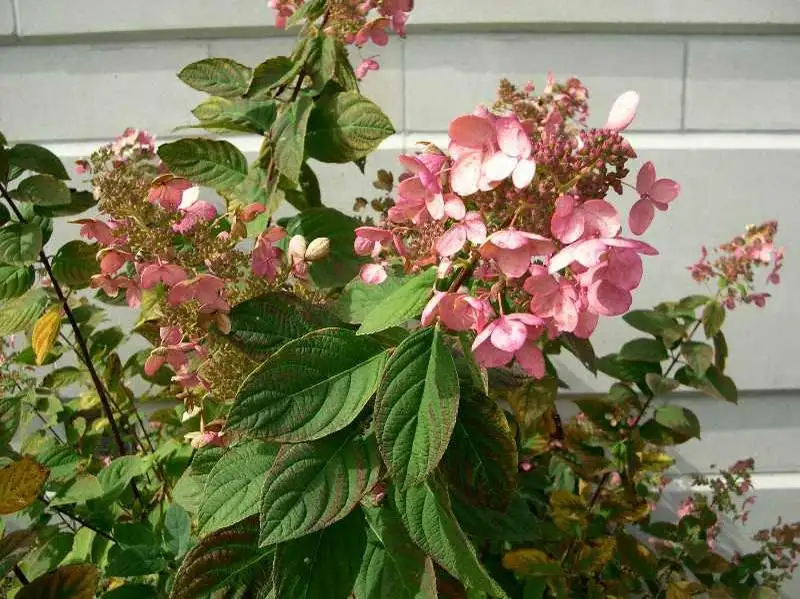
Pink Diamond opens large panicles of white flowers that deepen to bright pink as the summer display matures. Raised on a clear trunk, the spreading crown makes an eye-catching specimen above lower planting. Green leaves turn yellow in autumn. Reliable soil moisture is important: this is not a drought-tolerant hydrangea.
At a glance
- Sun
- Sun to shade
- Size
- Height: 11–13 ft for the standard form described by Hinsdale · Width: About 8 ft
- Water
- Keep soil moist and well drained
- Hardiness
- RHS H5 (UK rating; not a USDA zone)
- Bloom
- White panicles turning pink in summer
Sizes & prices
- #7Pink Diamond Hydrangea on StandardCall for price
Catalog updated September 8, 2026. This is not a live stock count; please call to confirm availability and price.
Ask about this plantSelect a section to expand.
Landscape use & tree form
- Major issues
- Brittle branches can break under heavy flowers, snow or wind; leaf spots and mildew may occur.
- Fruit / litter
- Dry capsules and fading flower heads persist; generally minor fruit litter.
- Form
- Flowering crown trained on a single stem; support and pruning determine its outline.
- Use
- Flowering small-tree accent near a patio or in a mixed border.
- Growth rate
- Vigorous seasonal shoots; extension varies strongly with pruning and moisture. Standard trunk height is set by training.
Resistance & tolerances
- Deer
- Deer may browse leaves and flower buds; protect young plants.
- Drought
- The cultivar's standard-form grower reports poor drought tolerance; provide consistent moisture.
- Wet soil
- Poor drainage and prolonged saturation can damage roots.
Resistance is not a guarantee; deer and rabbits may browse any plant.
Pollinators & wildlife
- Attracts
- Bees, Butterflies
Keep in mind: Standard height varies with nursery training; the cited dimensions describe the tree form, not an untrained shrub.
Seasonal interest
- Foliage
- Green; golden yellow in fall
Growing & care
- Pruning
- Blooms on new wood: shorten crown shoots in late winter or early spring. In standards, retain the trunk and remove shoots below the raised crown.
- Soil
- Rich, moisture-retentive but well-drained soil; mulch shallow roots.
Sources & photo credits
Photo: Courtesy Missouri Botanical Garden PlantFinder · MBG PlantFinder public online-use grant; exact caption/direct link required
Reviewed September 22, 2026. Growing conditions vary by location.