
Trees
Hydrangea paniculata 'DVP PINKY'
Pinky Winky panicle hydrangea, tree form
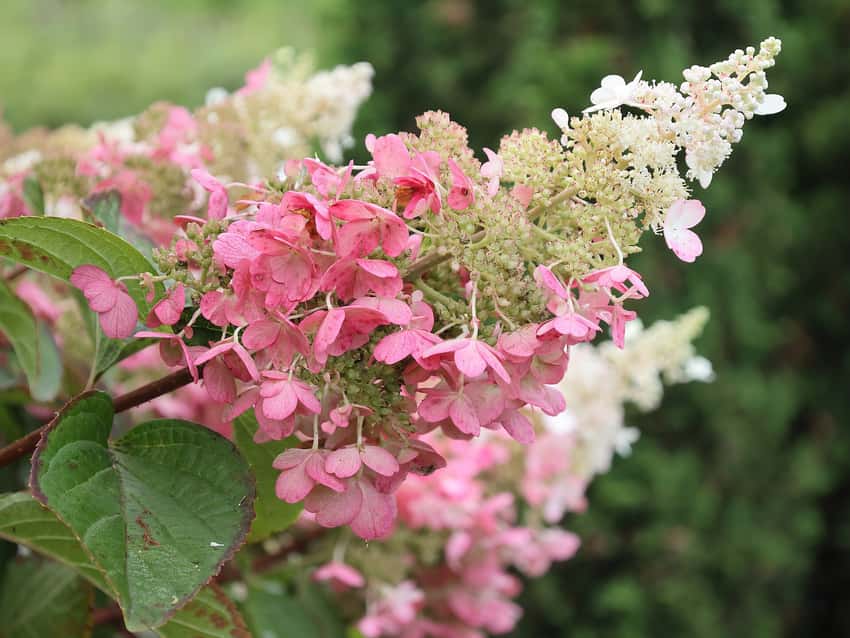
Large flower clusters open white and gradually turn pink from the base while their tips continue to grow. This creates a two-toned display from summer into fall. Trained on a clear trunk, this form raises the flowers above surrounding planting; overall height depends on the original training.
At a glance
- Sun
- Full sun to part sun
- Size
- Height: About 8 ft in Wasco's tree-form guide; trained trunk height and pruning affect the result. · Width: 6–8 ft.
- Water
- Average; moist, well-drained soil
- Hardiness
- USDA zones 3–9
- Bloom
- White aging pink; summer–early fall
Sizes & prices
- #7Call for price
Catalog updated September 8, 2026. This is not a live stock count; please call to confirm availability and price.
Ask about this plantSelect a section to expand.
Landscape use & tree form
- Use
- Ornamental flowering specimen; mixed border
- Major issues
- Brittle branches can break under heavy flowers, snow or wind; leaf spots and mildew may occur.
- Fruit / litter
- Dry capsules and fading flower heads persist; generally minor fruit litter.
- Form
- Flowering crown trained on a single stem; support and pruning determine its outline.
- Growth rate
- Fast crown growth, according to the standard-form grower.
Resistance & tolerances
- Deer
- Deer may browse leaves and flower buds; protect young plants.
- Drought
- Moderate species-level tolerance after establishment, but flowering is best with consistent moisture.
- Wet soil
- Poor drainage and prolonged saturation can damage roots.
Resistance is not a guarantee; deer and rabbits may browse any plant.
Pollinators & wildlife
- Attracts
- Bees, Butterflies
Seasonal interest
- Foliage
- Deciduous
Growing & care
- Pruning
- Blooms on new wood: shorten crown shoots in late winter or early spring. In standards, retain the trunk and remove shoots below the raised crown.
- Form
- Maintain the clear trunk and remove unwanted basal shoots.
- Soil
- Rich, moisture-retentive but well-drained soil; mulch shallow roots.
Sources & photo credits
University of Georgia Extension
Photo: Cephas / Wikimedia Commons · CC BY-SA 4.0

Reviewed September 22, 2026. Growing conditions vary by location.