
Trees
Heptacodium miconioides 'Minhep'
Tianshan seven-son flower
Also known as: Minhep
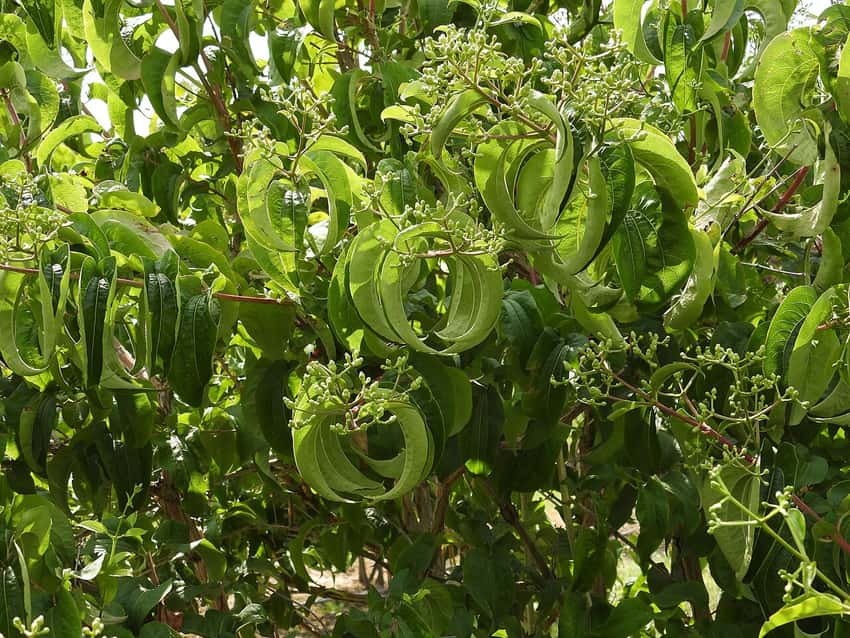
Tianshan brings its strongest flower display toward the end of summer, when fragrant white clusters appear above glossy green foliage. Decorative red sepals follow as the flowers fade, while autumn leaves become yellow. Peeling bark carries the interest into winter on an upright, arching shrub or small tree.
At a glance
- Sun
- Full sun to part shade
- Size
- Height: 8–12 ft typical landscape size; older trees can grow larger · Width: 5–7 ft typical landscape size
- Water
- Moist, well-drained soil
- Hardiness
- USDA 5–9
- Bloom
- Fragrant creamy white in late summer
Sizes & prices
- #5$84.99
Catalog updated September 8, 2026. This is not a live stock count; please call to confirm availability and price.
Ask about this plantSelect a section to expand.
Landscape use & tree form
- Use
- Ornamental specimen
- Fruit / litter
- Small dry fruits surrounded by pink-red sepals follow late flowers.
- Growth rate
- Species guidance: medium; cultivar and growing conditions may differ.
- Form
- Compact, upright and arching multistemmed form.
- Major issues
- Species guidance: no significant insect or disease problems are usually reported.
Resistance & tolerances
- Deer
- Reported deer tolerant, but bucks may rub and seriously injure the bark.
- Drought
- Moderately sensitive; regular watering is preferable to prolonged dry soil.
- Wet soil
- Choose moist, well-drained soil; prolonged saturation tolerance is not established.
Resistance is not a guarantee; deer and rabbits may browse any plant.
Pollinators & wildlife
- Attracts
- Bees, Butterflies
- Evidence
- Species-level guidance; cultivar habitat value varies.
Seasonal interest
- Foliage
- Glossy green; yellow in late fall
- Bark
- Exfoliating bark in winter
- Sepals
- Red after flowering
Growing & care
- Soil
- Adaptable to soil type; moisture-retentive, well-drained ground is best.
- Pruning
- Select stems for the desired multistemmed or tree form while young; avoid hiding the exfoliating bark with dense basal shoots.
Sources & photo credits
University of Minnesota Extension
conservationgardenpark.jvwcd.gov
Photo: Homoarborea / Wikimedia Commons · CC0 1.0

Reviewed September 22, 2026. Growing conditions vary by location.