
Trees
Ginkgo biloba 'Mariken'
Mariken dwarf ginkgo
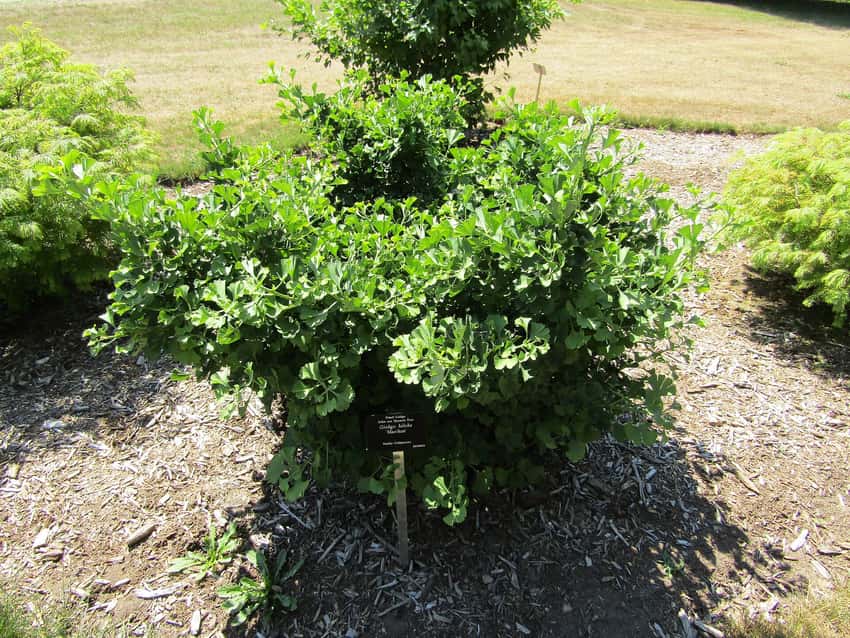
Mariken forms a compact, flattened globe of foliage, often displayed on a grafted trunk. Large green fan-shaped leaves turn yellow in autumn, and branches may begin to droop slightly with age. The height of a tree-form specimen depends strongly on its graft position rather than the cultivar's canopy alone.
At a glance
- Sun
- Full sun
- Size
- Height: Depends on graft height; supplier lists up to 3 m overall · Width: 1–1.5 m supplier estimate
- Water
- Average; well-drained soil
- Hardiness
- USDA zone 5a minimum
Sizes & prices
- #3Dwarf Mariken Ginkgo$149.99
- B&B 3'Call for price
Catalog updated September 8, 2026. This is not a live stock count; please call to confirm availability and price.
Ask about this plantSelect a section to expand.
Landscape use & tree form
- Use
- Small-garden specimen; container
- Form
- Compact flattened globe; height depends on graft
- Major issues
- Usually few serious pest or disease problems; protect young bark from physical damage.
- Growth rate
- Slow
- Fruit / litter
- Male clone; does not form the messy fleshy seed crop of female ginkgos.
Resistance & tolerances
- Deer
- Parent-species guidance: Some browsing resistance; not deer-proof. Protect young plants.
- Drought
- Parent-species guidance: Tolerates some drought after establishment; water during prolonged dry spells.
- Wet soil
- Parent-species guidance: Avoid waterlogged or poorly drained soil.
- Heat
- Parent-species guidance: Heat tolerant with suitable soil moisture.
Resistance is not a guarantee; deer and rabbits may browse any plant.
Keep in mind: Overall height depends on graft height and training; confirm the form of the actual nursery plant.
Seasonal interest
- Foliage
- Green to yellow; deciduous
- Seed
- Male selection
Growing & care
- Site
- Adaptable to soil texture and pH; avoid waterlogged ground.
- Pruning
- Prune sparingly to establish a sound framework; retain the dwarf or columnar cultivar's natural habit.
- Soil
- Moist, well-drained; brief dry periods tolerated; occasional wetness tolerated
Sources & photo credits
University of Minnesota Extension
Photo: Leonora (Ellie) Enking · CC BY-SA 2.0

Reviewed September 22, 2026. Growing conditions vary by location.