
Trees
Fagus sylvatica 'Riversii'
Rivers purple beech
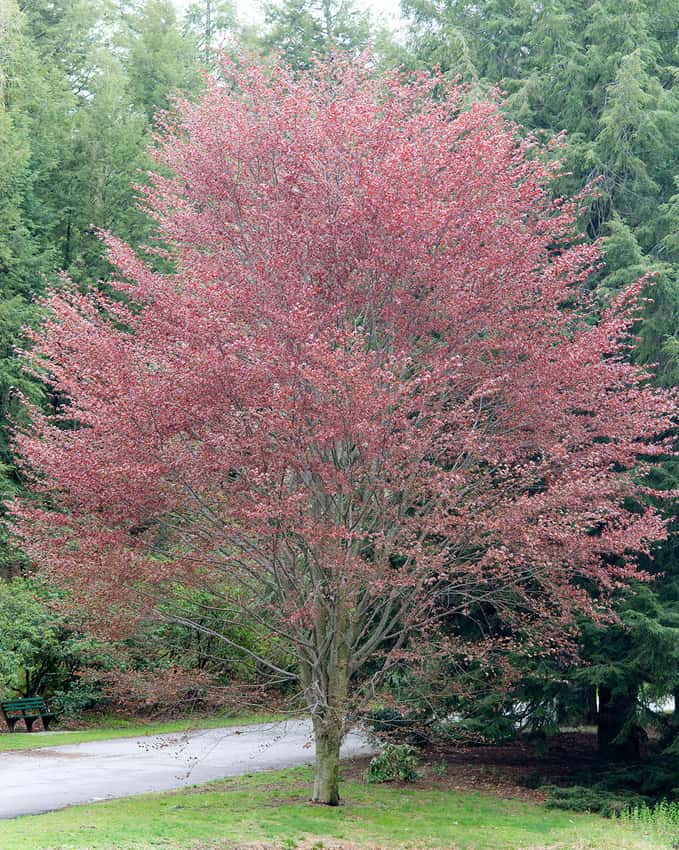
Riversii is a large purple-leaved beech with a rounded crown and smooth grey bark. Its glossy leaves are larger than those of the species and hold a deep, almost blackish purple-brown color well into the season. Despite relatively slow growth, this is a long-term park-sized tree, not a compact ornamental.
At a glance
- Sun
- Full sun to part shade
- Size
- Height: 25–30 m eventual · Width: 10–15 m eventual
- Water
- Moist, well-drained soil
- Hardiness
- USDA zone 5b minimum
Sizes & prices
- B&B 6-7'$249.99
Catalog updated September 8, 2026. This is not a live stock count; please call to confirm availability and price.
Ask about this plantSelect a section to expand.
Landscape use & tree form
- Use
- Large landscape specimen; avenue tree
- Form
- Rounded, semi-open crown
- Growth rate
- Slow
- Major issues
- Beech leaf disease threatens American and European beeches. Also watch for beech bark disease, scale and stress-related borers.
- Fruit / litter
- Beechnuts and dry leaves provide seasonal litter; some leaves remain through winter.
Resistance & tolerances
- Deer
- Parent-species guidance: Some browsing resistance; not deer-proof. Protect young plants.
- Drought
- Best with steady moisture; hot, dry sites stress foliage and shallow roots.
- Wet soil
- Poor tolerance of high water tables
Resistance is not a guarantee; deer and rabbits may browse any plant.
Pollinators & wildlife
- Wildlife food
- Nuts for birds and small mammals
- Evidence
- Species-level guidance; cultivar habitat value varies.
Keep in mind: Eventually a very large tree. Avoid paving over its root zone or planting in persistently waterlogged soil.
Seasonal interest
- Foliage
- Glossy dark purple-brown; deciduous
- Bark
- Smooth grey
Growing & care
- Pruning
- Preserve the natural crown; weeping forms may need early leader training. Avoid heavy canopy opening and damage to shallow roots or thin bark.
Sources & photo credits
University of Minnesota Extension
Photo: Plant Image Library · CC BY-SA 2.0

Reviewed September 22, 2026. Growing conditions vary by location.