
Trees
Fagus sylvatica f. pendula
Weeping European beech
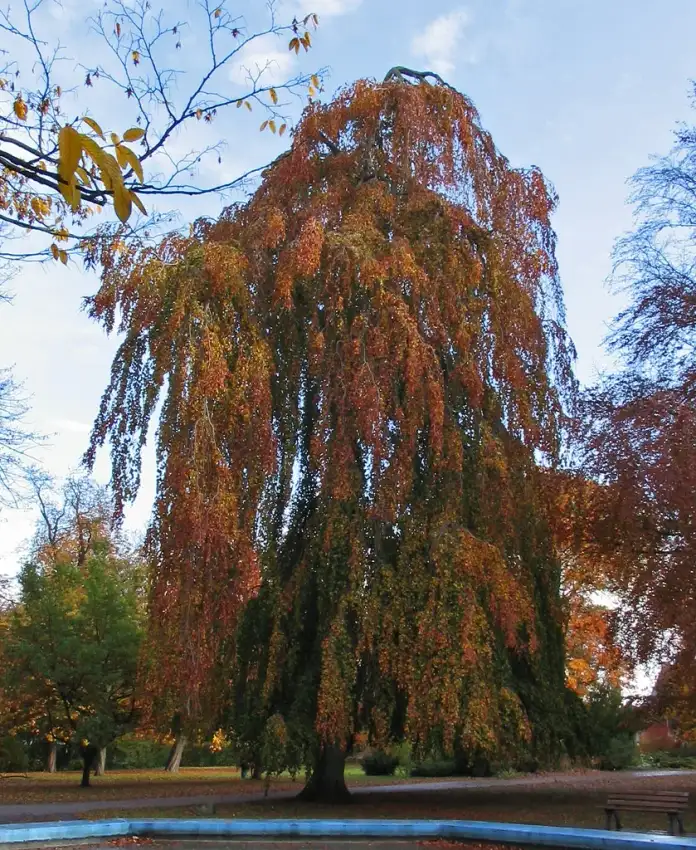
Long, drooping branches create a dramatic canopy that may sweep down to the ground. This is a large specimen tree, not a small weeping accent, and its outline varies with training. Allow ample space for the branches and keep the root area cool and well drained.
At a glance
- Sun
- Full sun / Part shade
- Size
- Height: 35 ft.–50 ft. · Width: 20 ft.–40 ft.
- Water
- Moist, well-drained soil
- Hardiness
- USDA zones 4–7
Sizes & prices
- B&B 6-7'Weeping Beech TreeCall for price
Catalog updated September 8, 2026. This is not a live stock count; please call to confirm availability and price.
Ask about this plantSelect a section to expand.
Landscape use & tree form
- Use
- Ornamental specimen
- Form
- Dense; Multi-stemmed; Weeping
- Growth rate
- Slow
- Major issues
- Beech leaf disease threatens American and European beeches. Also watch for beech bark disease, scale and stress-related borers.
- Fruit / litter
- Beechnuts and dry leaves provide seasonal litter; some leaves remain through winter.
Resistance & tolerances
- Deer
- Listed as resistant; protect young trees from browsing and antler rubbing.
- Drought
- Best with steady moisture; hot, dry sites stress foliage and shallow roots.
- Wet soil
- Avoid wet, compacted or poorly drained soil.
Resistance is not a guarantee; deer and rabbits may browse any plant.
Pollinators & wildlife
- Wildlife food
- Nuts for birds and small mammals
Seasonal interest
- Foliage
- Deciduous
Growing & care
- Pruning
- Preserve the natural crown; weeping forms may need early leader training. Avoid heavy canopy opening and damage to shallow roots or thin bark.
Sources & photo credits
University of Minnesota Extension
Photo: Darkone · CC BY-SA 2.0 DE
Image notes: Weeping European beech. Form in October in Germany. Resized and converted to WebP.
Reviewed September 22, 2026. Growing conditions vary by location.