
Trees
Cryptomeria japonica 'Gyokuryu'
Gyokuryu Japanese cedar
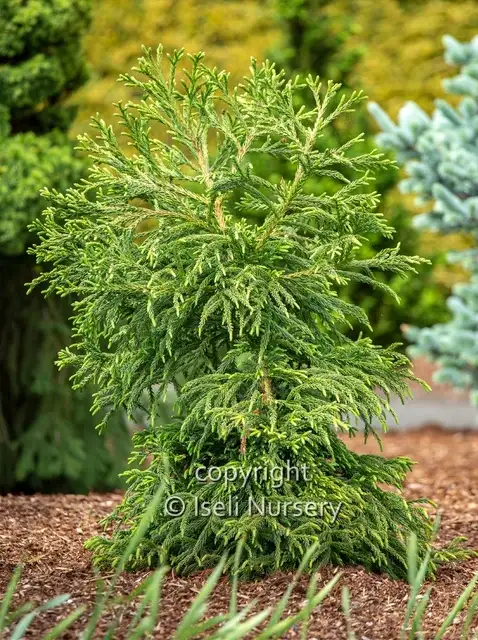
Gyokuryu is an evergreen Japanese cedar with short, dense dark-green needles and a pyramidal outline in Clemson Extension's cultivar description. Reported mature forms and sizes differ among arboretum collections, so check the individual nursery plant before choosing a permanent site.
At a glance
- Sun
- Sun to partial shade
- Size
- Height: 10–15 ft after about 10 years (Clemson Extension); older plants may grow larger · Width: 5–7 ft after about 10 years (Clemson Extension)
- Water
- Moist, well-drained soil
- Hardiness
- USDA zone 6 minimum
Sizes & prices
- #7$124.99
Catalog updated September 8, 2026. This is not a live stock count; please call to confirm availability and price.
Ask about this plantSelect a section to expand.
Landscape use & tree form
- Form
- Variable among plants sold under this name; inspect individual plant.
- Growth rate
- Slow to moderate in published collections.
- Use
- Evergreen specimen or focal accent.
Resistance & tolerances
- Deer
- Species is listed as resistant to deer damage, not deer-proof.
- Drought
- Established species trees tolerate dry periods, but water during prolonged drought; dwarf and container plants need closer moisture monitoring.
- Wet soil
- Prefers moist soil with good drainage.
Resistance is not a guarantee; deer and rabbits may browse any plant.
Seasonal interest
- Foliage
- Evergreen dark green needles; winter bronzing varies by source and growing conditions.
- Cones
- Small woody cones; species cones and fallen foliage are not usually a significant litter problem.
Growing & care
- Pruning
- Usually little shaping is needed. If necessary, shorten stray young shoots to a leafy side branch in early spring, retaining the cultivar's natural outline.
- Soil
- Rich, slightly acidic, moist but well-drained soil.
- Issues
- Allow air circulation; leaf spot and blight can occur. Monitor mites in dry weather.
Sources & photo credits
dawesarb.arboretumexplorer.org
University of Missouri Extension
Photo: Photo © Iseli Nursery; cropped from supplier plant sign, embedded copyright retained, no enlargement. · Iseli customer plant-resale promotional photo grant
Reviewed September 22, 2026. Growing conditions vary by location.