
Trees
Cryptomeria japonica 'Black Dragon'
Black Dragon Japanese cedar
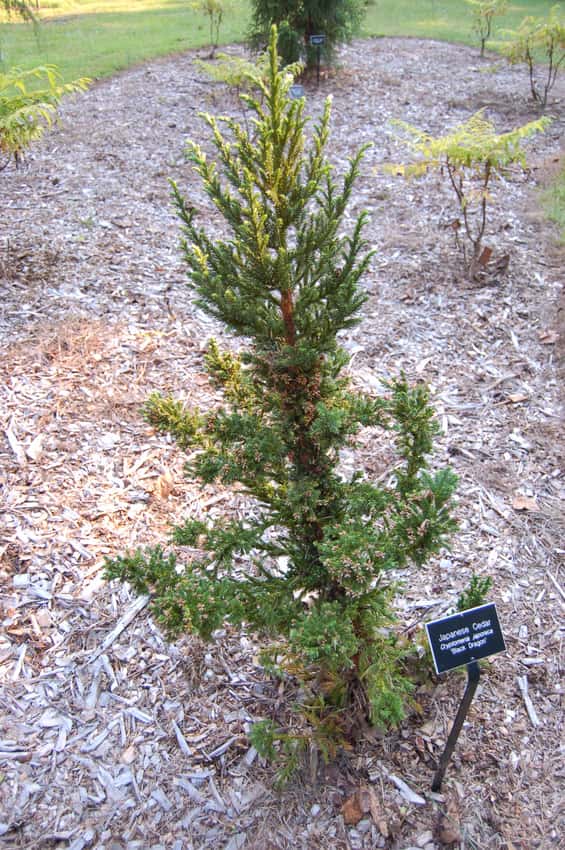
Black Dragon combines an irregular upright outline with some of the darkest foliage among Japanese cedars. Fresh growth begins lighter green and matures to a deep green that can appear nearly black in winter. Vigorous juvenile growth slows as the plant fills out, producing a dense, textured specimen rather than a full-sized screening tree.
At a glance
- Sun
- Sun to partial shade
- Size
- Height: 6 ft, supplier garden size, not ultimate size · Width: 4 ft, supplier garden size
- Water
- Maintain ample soil moisture.
- Hardiness
- USDA zone 6 minimum
Sizes & prices
- #3$89.99
Catalog updated September 8, 2026. This is not a live stock count; please call to confirm availability and price.
Ask about this plantSelect a section to expand.
Landscape use & tree form
- Form
- Broad upright
- Growth rate
- 6–8 inches/year (grower estimate)
- Use
- Evergreen specimen or focal accent.
Resistance & tolerances
- Deer
- Species is listed as resistant to deer damage, not deer-proof.
- Drought
- Established species trees tolerate dry periods, but water during prolonged drought; dwarf and container plants need closer moisture monitoring.
- Wet soil
- Prefers moist soil with good drainage.
Resistance is not a guarantee; deer and rabbits may browse any plant.
Keep in mind: Standard-form specimens have a raised crown; confirm stem height.
Seasonal interest
- Foliage
- Evergreen; deep green to almost black in winter
- Cones
- Small woody cones; species cones and fallen foliage are not usually a significant litter problem.
Growing & care
- Site
- Protect from cold, drying winds.
- Pruning
- Usually little shaping is needed. If necessary, shorten stray young shoots to a leafy side branch in early spring, retaining the cultivar's natural outline.
- Soil
- Rich, slightly acidic, moist but well-drained soil.
- Issues
- Allow air circulation; leaf spot and blight can occur. Monitor mites in dry weather.
Sources & photo credits
University of Minnesota Extension
University of Missouri Extension
Photo: Derek Ramsey (Ram-Man) · CC BY-SA 2.5

Reviewed September 22, 2026. Growing conditions vary by location.