
Trees
Cornus kousa 'Snow Tower'
Snow Tower kousa dogwood
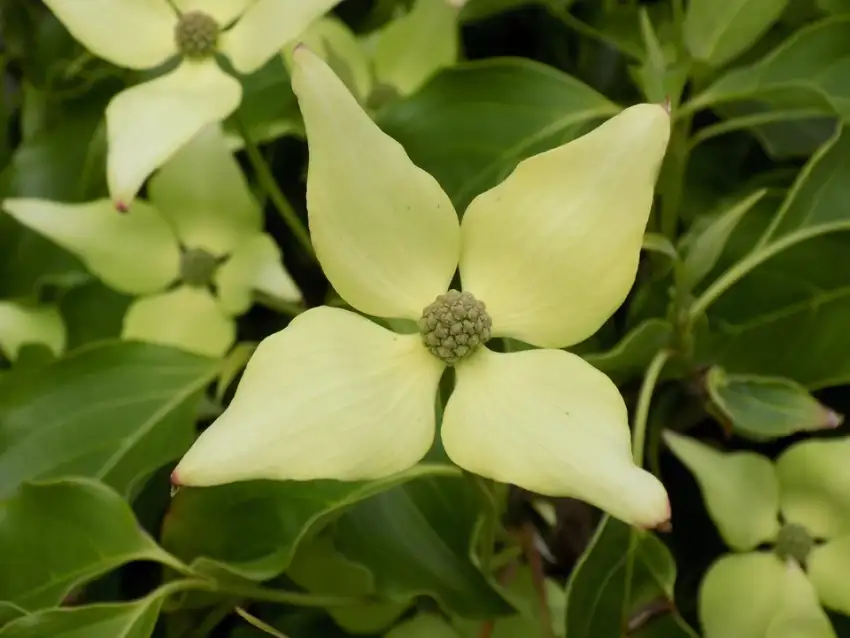
Snow Tower has a narrow, upright outline that gives kousa dogwood a place in tighter planting spaces. Large white bracts appear in late spring into early summer, followed by rounded red fruits. Reddish-purple autumn foliage completes a seasonal display that is especially useful where canopy width must stay restrained.
At a glance
- Sun
- Full sun to partial shade
- Size
- Height: 15 ft · Width: 6 ft
- Water
- Moist, well-drained soil
- Hardiness
- USDA 5
- Bloom
- White bracts, late May–June
Sizes & prices
- #10$149.99
Catalog updated September 8, 2026. This is not a live stock count; please call to confirm availability and price.
Ask about this plantSelect a section to expand.
Landscape use & tree form
- Use
- Ornamental specimen
- Fruit / litter
- Raspberry-like fruits fall in late summer and autumn; fermenting fruit can attract yellow jackets and seedlings may appear.
- Major issues
- Generally less anthracnose-prone than flowering dogwood; scale, borers, canker and leaf diseases remain possible.
- Growth rate
- Species guidance: slow; cultivar and growing conditions may differ.
- Form
- Narrow upright column.
Resistance & tolerances
- Deer
- Parent-species guidance: Some browsing resistance; not deer-proof. Protect young plants.
- Drought
- Species tolerates some dryness once established, better than flowering dogwood; irrigate prolonged drought.
- Wet soil
- Does not tolerate waterlogged soil.
Resistance is not a guarantee; deer and rabbits may browse any plant.
Pollinators & wildlife
- Attracts
- Bees
- Evidence
- Species-level guidance; cultivar habitat value varies.
Seasonal interest
- Foliage
- Deciduous
Growing & care
- Site
- Prefers acidic soil and some afternoon shade; avoid waterlogging.
- Pruning
- Allow the layered crown to develop naturally; restrict pruning to damaged, crossing or diseased branches.
- Soil
- Well-drained
Sources & photo credits
University of Minnesota Extension
Photo: Courtesy Missouri Botanical Garden PlantFinder · MBG PlantFinder public online-use grant; exact caption/direct link required
Reviewed September 22, 2026. Growing conditions vary by location.