
Trees
Cornus × elwinortonii 'KN144-2'
Rosy Teacups dogwood
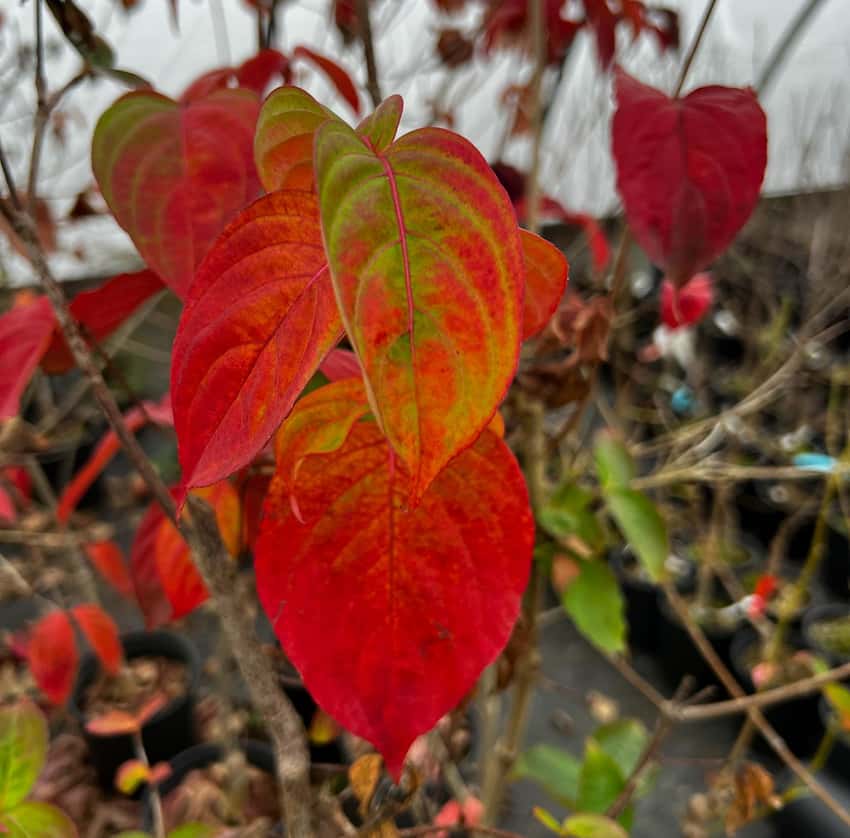
Rosy Teacups develops a dense, low-branched crown slightly wider than tall. Its pointed pink bracts are deeper toward their edges and can remain showy for several weeks. Glossy dark green leaves turn red in autumn, with orange-red fruits adding a further seasonal feature to this Rutgers selection.
At a glance
- Sun
- Full sun to partial shade
- Size
- Height: About 23 ft at 16 years · Width: About 25 ft at 16 years
- Water
- Average moisture; moist, well-drained soil
- Hardiness
- Tested in USDA 6a
- Bloom
- Pink bracts; April–May (grower bloom months)
Sizes & prices
- #10Pastel Pink DogwoodCall for price
Catalog updated September 8, 2026. This is not a live stock count; please call to confirm availability and price.
Ask about this plantSelect a section to expand.
Landscape use & tree form
- Use
- Ornamental flowering specimen
- Form
- Low-branched, rounded and wider than tall
- Growth rate
- Moderate
- Fruit / litter
- Orange-red fleshy fruits may drop beneath the crown.
- Major issues
- Breeder observed no insect or disease problems in 15 years of trials; this does not guarantee immunity.
Resistance & tolerances
- Deer
- Grower-rated deer resistant; not deer-proof.
- Drought
- Dry-weather care: Average moisture; moist, well-drained soil. Maintain the recommended moisture during extended dry spells; no cultivar-specific drought rating confirmed.
- Wet soil
- Maintain moisture but avoid soggy, waterlogged ground.
Resistance is not a guarantee; deer and rabbits may browse any plant.
Pollinators & wildlife
- Birds
- Attracted to this plant
Seasonal interest
- Foliage
- Glossy green in summer, turning red in fall; deciduous
Growing & care
- Pruning
- Preserve the flowering, layered crown with light selective pruning; remove dead and crossing wood rather than routinely heading back the tree.
- Soil
- Moist, fertile, well-drained soil; protect the root zone from drying.
Sources & photo credits
University of Minnesota Extension
Photo: plant lust · CC BY-SA 2.0
Reviewed September 22, 2026. Growing conditions vary by location.