Trees
Cornus florida 'Cherokee Chief'
Cherokee Chief flowering dogwood
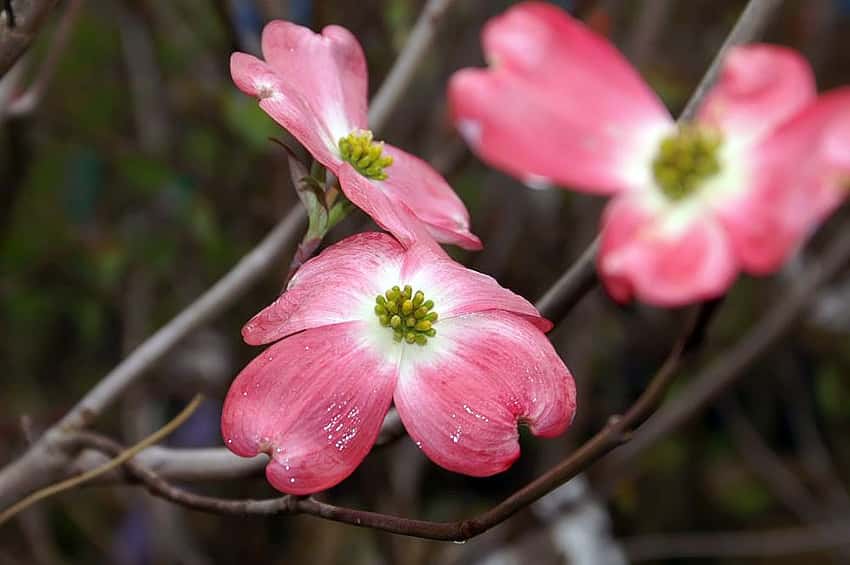
Cherokee Chief produces ruby-red floral bracts above an elegant, layered branch structure. Bronze-red young leaves become green before turning burgundy in autumn, and red fruit extends the display. The low-branched crown is typically broader than tall, so give this deciduous dogwood enough horizontal room to develop naturally.
At a glance
- Sun
- Full sun to partial sun
- Size
- Height: 15–20 ft · Width: 20–25 ft
- Water
- Water when top 2 inches dry
- Hardiness
- USDA 5–9
- Bloom
- Ruby-red bracts, spring
Sizes & prices
- #7Pink DogwoodCall for price
- #10Pink DogwoodCall for price
Catalog updated September 8, 2026. This is not a live stock count; please call to confirm availability and price.
Ask about this plantSelect a section to expand.
Landscape use & tree form
- Use
- Ornamental specimen; Understory planting
- Major issues
- Powdery mildew, anthracnose, canker and borers are possible; individual cultivar resistance varies.
- Fruit / litter
- Red autumn drupes feed birds; leaves and fruit create seasonal litter.
- Growth rate
- Species guidance: medium; cultivar and growing conditions may differ.
- Form
- Low-branched, broad crown with layered branches.
Resistance & tolerances
- Deer
- Deer browse foliage; substantial damage is possible despite some resistance listings.
- Drought
- Shallow roots need supplemental water in dry periods; mulch to conserve moisture.
- Wet soil
- Parent-species guidance: Requires drainage; keep shallow roots moist, not waterlogged.
Resistance is not a guarantee; deer and rabbits may browse any plant.
Pollinators & wildlife
- Attracts
- Bees, Butterflies
- Caterpillar host
- Butterflies
- Evidence
- Species-level guidance; cultivar habitat value varies.
Native range
- Native range / parentage
- Cultivar/selection of a species native to eastern North America to eastern Mexico. Cultivated selection of a Kentucky-native species; not wild local stock.
- Tristate native status
- Cultivated selection of a Kentucky-native species; not wild local stock.
Seasonal interest
- Foliage
- Deciduous
Growing & care
- Mulch
- Use mulch to conserve moisture and keep roots cool; keep it clear of the trunk.
- Pruning
- Preserve the layered branching; remove dead or diseased wood promptly and avoid unnecessary large wounds near the trunk.
- Soil
- Moist, well-drained; brief dry periods tolerated
Sources & photo credits
University of Minnesota Extension
Photo: David J. Stang · CC BY-SA 4.0

Reviewed September 22, 2026. Growing conditions vary by location.