
Trees
Chionanthus virginicus
American fringetree
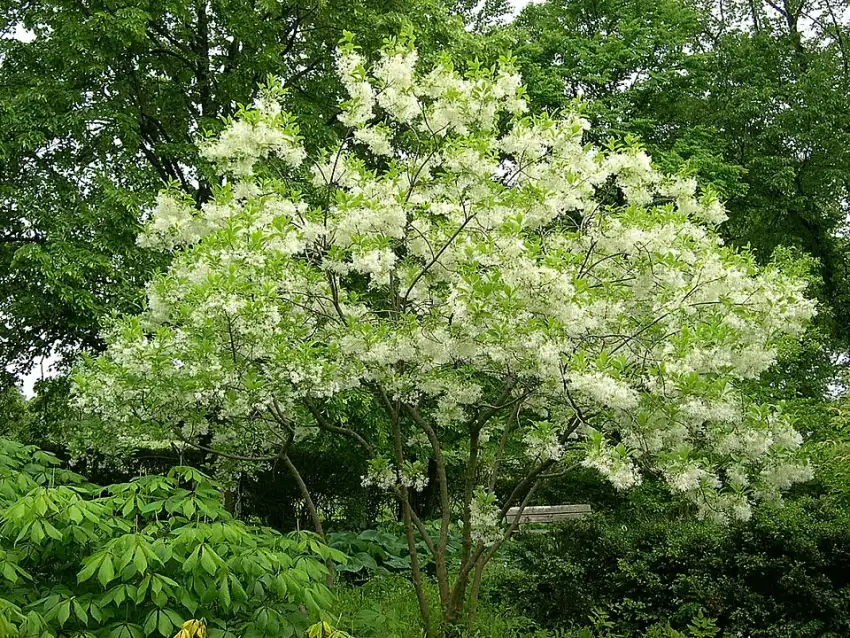
A small native tree with airy, fragrant white flowers in late spring and yellow autumn foliage. Its naturally rounded, often multistemmed shape suits woodland edges and mixed plantings. Fruiting plants carry blue-black berries that attract birds; flower display and fruit production vary between plants.
At a glance
- Sun
- Full sun / Part shade
- Size
- Height: 12–20 ft.; sometimes taller · Width: 12 ft.–20 ft.
- Water
- Moist, well-drained soil
- Hardiness
- USDA zones 3–9
Sizes & prices
- #3Fringe Tree$89.99
- #10$189.99
- #15American Fringe Tree$189.99
Catalog updated September 8, 2026. This is not a live stock count; please call to confirm availability and price.
Ask about this plantSelect a section to expand.
Landscape use & tree form
- Use
- Ornamental specimen
- Form
- Multi-stemmed; Oval; Spreading
- Growth rate
- Slow
- Fruit / litter
- Female plants may carry blue-black drupes, eaten by birds.
- Pollination
- Functionally male and female flowers usually occur on separate plants. Fruiting is concentrated on female plants with compatible pollen nearby.
- Major issues
- Emerald ash borer can attack; drought stress increases susceptibility to borers and scale.
Resistance & tolerances
- Deer
- Can sustain substantial browsing; protect young plants.
- Drought
- Tolerant once established; water during establishment and prolonged dry spells.
- Wet soil
- Occasional wetness tolerated; do not assume tolerance of permanent flooding.
Resistance is not a guarantee; deer and rabbits may browse any plant.
Pollinators & wildlife
- Birds
- Fruit provides food
Native range
- Native range / parentage
- Central & Eastern U.S.A Species native to Kentucky.
- Tristate native status
- Species native to Kentucky.
Seasonal interest
- Foliage
- Deciduous
Growing & care
- Pruning
- Retain the naturally multistemmed crown, or select a trunk while young; avoid repeated removal of large mature limbs.
- Soil
- Moist, well-drained; brief dry periods tolerated; occasional wetness tolerated
Sources & photo credits
University of Minnesota Extension
Photo: Jason Sturner / CC BY 2.0; resized and converted to WebP · CC BY 2.0

Image notes: American fringetree in flower. Jason Sturner / CC BY 2.0. Resized and converted to WebP.
Reviewed September 22, 2026. Growing conditions vary by location.