
Trees
Chamaecyparis nootkatensis 'Glauca'
Blue Nootka cypress
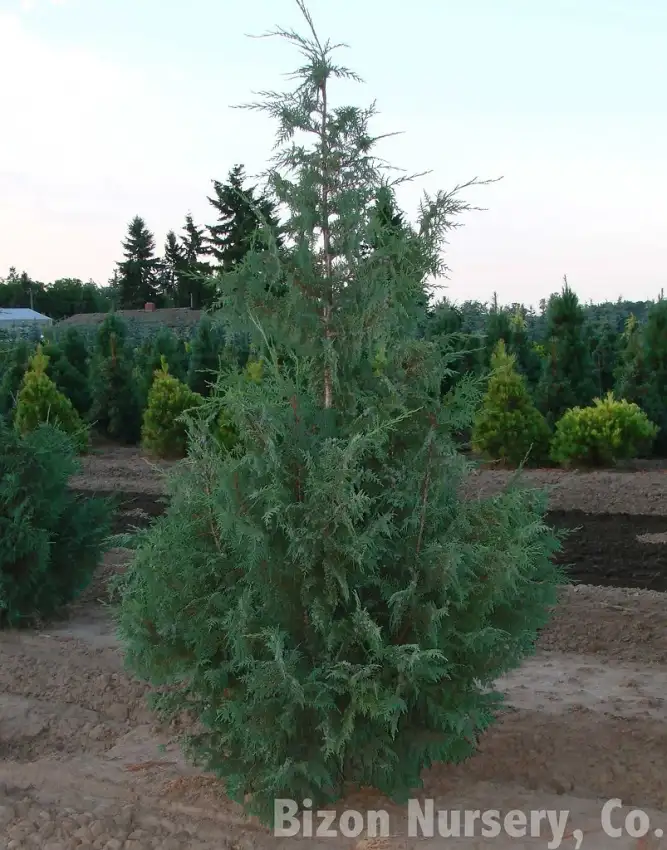
Sweeping branches and finely textured blue-green foliage give this Nootka cypress a graceful presence. Young branches rise upward, becoming more horizontal as the tree develops its broad pyramidal outline. It works as a substantial specimen or large hedge, particularly in moist conditions where its soft foliage can remain full.
At a glance
- Sun
- Full sun
- Size
- Height: 25 ft, supplier garden size, not ultimate size · Width: 15 ft, supplier garden size
- Water
- Moist, well-drained soil
- Hardiness
- USDA zone 5 minimum
Sizes & prices
- #5Chamaecyparis Blue Weeping Alaskan Cedar$104.99
Catalog updated September 8, 2026. This is not a live stock count; please call to confirm availability and price.
Ask about this plantSelect a section to expand.
Landscape use & tree form
- Form
- Broad upright, pyramidal
- Growth rate
- 12+ inches/year (grower estimate)
- Use
- Specimen; large hedge
Resistance & tolerances
- Deer
- Browsing resistance varies with site and deer pressure; protect young plants where browsing occurs.
- Drought
- The parent species is sensitive to drought; irrigate during dry periods.
- Wet soil
- Parent species favors moist soil with good drainage.
Resistance is not a guarantee; deer and rabbits may browse any plant.
Native range
- Native range / parentage
- Cultivar of a western North American species native from Alaska to northern California.
Seasonal interest
- Foliage
- Evergreen; blue-green
- Cones
- Small, round brown cones; species cones take two years to mature.
Growing & care
- Pruning
- Usually little pruning is needed. If shaping is necessary, prune in early spring to a leafy side shoot; avoid cutting into bare old wood.
- Soil
- Moist, well-drained soil; deep loam is especially suitable.
- Site
- Shelter from drying winter winds and mulch the root zone.
- Issues
- Root rot is a risk in poorly drained soil; mites and borers can occur.
Sources & photo credits
Photo: MDBolin / Flickr, CC BY-SA 2.0; resized for web. · CC BY-SA 2.0
Image notes: Blue Nootka cypress. Photo: MDBolin / Flickr, CC BY-SA 2.0; resized for web.
Reviewed September 22, 2026. Growing conditions vary by location.