Trees
Cercis canadensis 'Forest Pansy'
Forest Pansy redbud
Also known as: Forest Pansey
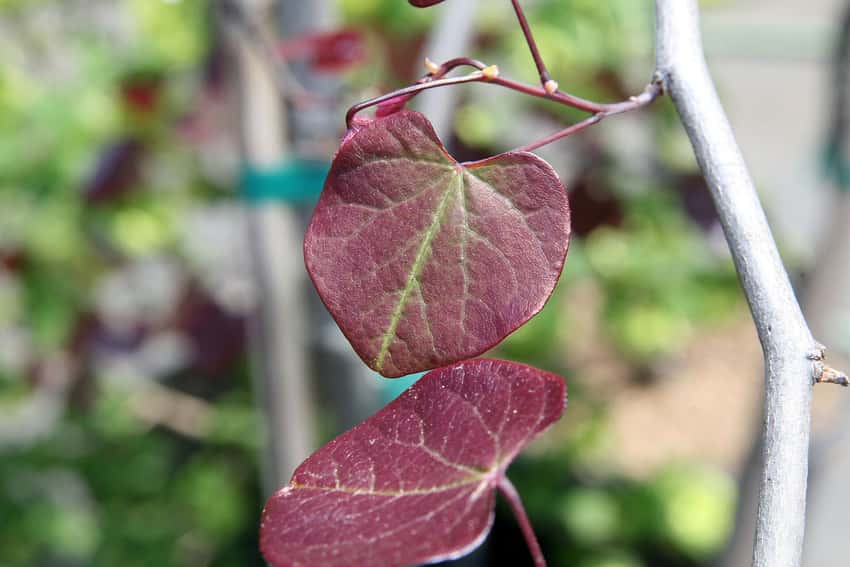
Forest Pansy combines the familiar early flowers of eastern redbud with richly colored leaves. Magenta-rose blooms appear on bare branches, then glossy purple growth expands into a rounded, spreading canopy. The foliage can become bronze-green as the season progresses, with yellow-orange tones developing before autumn leaf fall.
At a glance
- Sun
- Full sun to part shade
- Size
- Height: 20 ft · Width: 25 ft
- Water
- Moist, well-drained soil
- Hardiness
- USDA 5
- Bloom
- Magenta-rose, spring
Sizes & prices
- #10Forest Pansey Redbud$169.99
Catalog updated September 8, 2026. This is not a live stock count; please call to confirm availability and price.
Ask about this plantSelect a section to expand.
Landscape use & tree form
- Use
- Ornamental specimen; Understory planting
- Major issues
- Canker, dieback, Verticillium wilt and borers can affect stressed redbuds; avoid root disturbance.
- Form
- Rounded, spreading
- Growth rate
- Species: moderate; compact and weeping cultivars differ in extension growth.
- Fruit / litter
- Species-type brown pods may persist and drop; production varies by selection and pollination.
Resistance & tolerances
- Deer
- Browsing can be significant despite some resistance reports; protect young trees.
- Drought
- Parent-species guidance: Drought can stress plants; irrigate through dry periods.
- Wet soil
- Parent-species guidance: Avoid waterlogged soil.
Resistance is not a guarantee; deer and rabbits may browse any plant.
Pollinators & wildlife
- Attracts
- Bees, Butterflies
- Caterpillar host
- Caterpillars
- Evidence
- Species-level guidance; cultivar habitat value varies.
Native range
- Native range / parentage
- Cultivar/selection of a species native to eastern and central North America. Cultivated selection of a Kentucky-native species; not wild local stock.
- Tristate native status
- Cultivated selection of a Kentucky-native species; not wild local stock.
Seasonal interest
- Foliage
- Purple leaves aging bronze-green; yellow-orange fall tones
Growing & care
- Site
- Water well during establishment. Avoid root disturbance and remove dead branches.
- Pruning
- Maintain sound branch attachments while young; remove dead wood and weak crossing branches. Preserve a weeping cultivar's trained leader and remove shoots below any graft.
- Soil
- Moist, well-drained; brief dry periods tolerated
Sources & photo credits
University of Minnesota Extension
Photo: David J. Stang · CC BY-SA 4.0

Reviewed September 22, 2026. Growing conditions vary by location.