Trees
Carpinus japonica
Japanese hornbeam
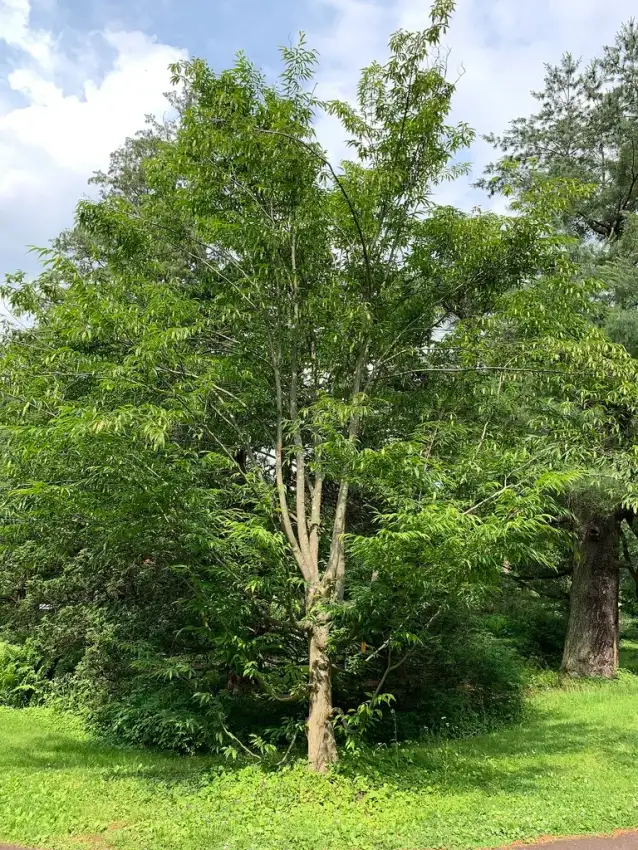
A slow-growing tree with strongly veined leaves, attractive hanging fruit clusters and a sturdy branching structure. Its smaller scale and shade tolerance make it useful near woodland edges. Give the crown room to develop rather than crowding it against a building.
At a glance
- Sun
- Deep shade / Full sun / Part shade
- Size
- Height: 20 ft.–30 ft. · Width: 20 ft.–30 ft.
- Water
- Moist, well-drained soil
- Hardiness
- USDA zone 5 minimum; zone 4 also reported
Sizes & prices
- B&B 4"+, 14'3.75"-4.24" Japanese Hornbeam$849.99
Catalog updated September 8, 2026. This is not a live stock count; please call to confirm availability and price.
Ask about this plantSelect a section to expand.
Landscape use & tree form
- Use
- Understory planting
- Form
- Pyramidal; Rounded
- Growth rate
- Slow
- Major issues
- Usually low maintenance; occasional cankers, leaf spots, aphids or caterpillars.
- Fruit / litter
- Dry nutlets in distinctive hanging clusters ripen in fall and shed over winter.
Resistance & tolerances
- Deer
- Listed as deer resistant by Great Plant Picks; not deer-proof.
- Drought
- Moderate drought tolerance once established; best in average to moist soil.
- Wet soil
- Moist, well-drained soil preferred; avoid prolonged saturation.
- Shade
- Tolerates heavy shade.
Resistance is not a guarantee; deer and rabbits may browse any plant.
Seasonal interest
- Foliage
- Deeply veined green leaves; deciduous.
- Fruit
- Hop-like hanging fruit clusters mature to small brown nutlets.
Growing & care
- Pruning
- Little routine pruning needed; retain the low understory crown and remove crossing or damaged branches selectively.
Sources & photo credits
University of Minnesota Extension
Photo: KATHERINE WAGNER-REISS · CC BY-SA 4.0
Image notes: Japanese hornbeam. Form of the upright tree. Resized and converted to WebP.
Reviewed September 22, 2026. Growing conditions vary by location.