Trees
Betula nigra 'BNMTF'
Dura Heat river birch
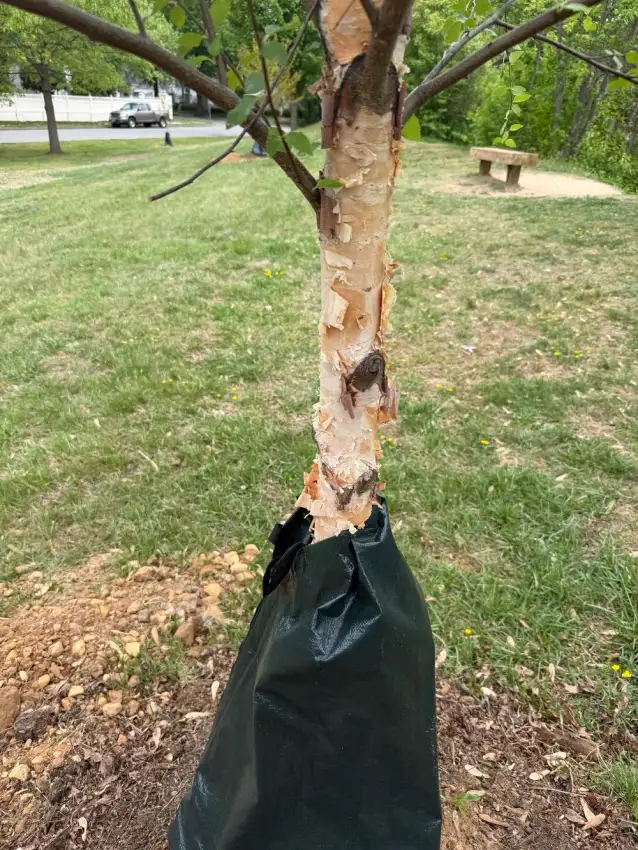
Dura Heat is a river birch selection valued for its performance in summer heat and its ornamental peeling bark. The canopy provides summer shade, while the trunk remains an important feature after leaf fall. It prefers moist, acidic soil and offers a useful option where other birches struggle with warmer conditions.
At a glance
- Sun
- Full sun to partial shade
- Size
- Height: 30–40 ft · Width: 25–35 ft
- Water
- Medium to wet
- Hardiness
- USDA 4–9
- Bloom
- Brownish-green catkins, April–May
Sizes & prices
- #7 MS$149.99
Catalog updated September 8, 2026. This is not a live stock count; please call to confirm availability and price.
Ask about this plantSelect a section to expand.
Landscape use & tree form
- Use
- Ornamental specimen
- Fruit / litter
- Small seed clusters, leaves and numerous twigs drop; keep away from gutters.
- Major issues
- Leaf spots, aphids and leaf miners may occur; resistant to bronze birch borer.
- Form
- Upright, densely branched crown becoming oval; often grown multistemmed.
- Growth rate
- Moderate to fast; species guidance for these full-sized selections.
Resistance & tolerances
- Deer
- Parent-species guidance: Some browsing resistance; not deer-proof. Protect young plants.
- Drought
- Parent-species guidance: Best with consistent moisture; drought can cause leaf shedding.
- Wet soil
- Parent-species guidance: Occasional wetness tolerated; this does not imply permanent flooding tolerance.
- Heat
- Good heat tolerance; cultivar noted by University of Georgia
Resistance is not a guarantee; deer and rabbits may browse any plant.
Pollinators & wildlife
- Caterpillar host
- Butterflies
- Evidence
- Species-level guidance; cultivar habitat value varies.
Native range
- Native range / parentage
- Cultivar/selection of a species native to central and eastern United States. Cultivated selection of a Kentucky-native species; not wild local stock.
- Tristate native status
- Cultivated selection of a Kentucky-native species; not wild local stock.
Seasonal interest
- Bark
- Exfoliating bark gives winter interest
- Foliage
- Green deciduous leaves, usually yellow in fall.
Growing & care
- Pruning
- Usually needs little pruning. Avoid late-winter and spring cuts while sap is flowing; retain the selected single- or multitrunk structure.
- Soil
- Consistently moist, acidic loam; mulch the root zone to reduce drying and overheating.
- Mulch
- Mulch and irrigate as needed to keep roots cool and moist
Sources & photo credits
University of Georgia Extension
Photo: Cossey25 / Wikimedia Commons, CC BY-SA 4.0; resized for web without enlargement. · CC BY-SA 4.0

Image notes: Bark detail of a single-stem Dura Heat river birch; not current Reminiscent stock. Cossey25 / Wikimedia Commons, CC BY-SA 4.0; resized for web without enlargement.
Reviewed September 22, 2026. Growing conditions vary by location.