Trees
Betula nigra 'Whit XXV'
City Slicker river birch
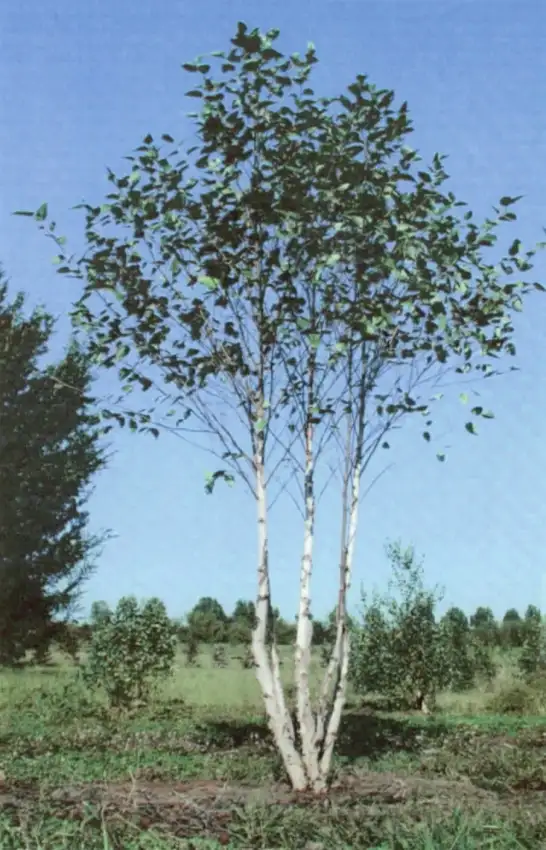
City Slicker stands out for creamy-white bark that develops while the tree is still young. Glossy dark green leaves turn yellow-gold in autumn above an upright, broadly pyramidal to oval framework. This river birch selection originated from Oklahoma material and was selected for improved performance in heat and dry conditions.
At a glance
- Sun
- Full sun to part shade
- Size
- Height: About 35 ft (breeder estimate) · Width: About 25 ft (breeder estimate)
- Water
- Consistently moist soil
- Hardiness
- USDA zone 5 cold-hardiness rating
Sizes & prices
- #15 SSSuper Drought Tolerant$124.99
Catalog updated September 8, 2026. This is not a live stock count; please call to confirm availability and price.
Ask about this plantSelect a section to expand.
Landscape use & tree form
- Use
- Ornamental specimen
- Fruit / litter
- Small seed clusters, leaves and numerous twigs drop; keep away from gutters.
- Major issues
- Leaf spots, aphids and leaf miners may occur; resistant to bronze birch borer.
- Form
- Upright, broadly pyramidal to oval crown.
- Growth rate
- Moderate to fast; species guidance for these full-sized selections.
Resistance & tolerances
- Deer
- Parent-species guidance: Some browsing resistance; not deer-proof. Protect young plants.
- Drought
- Increased tolerance; not a substitute for establishment watering
- Wet soil
- Parent-species guidance: Occasional wetness tolerated; this does not imply permanent flooding tolerance.
- Heat
- Increased tolerance reported by supplier
- Leaf spot
- Extension source reports resistance
Resistance is not a guarantee; deer and rabbits may browse any plant.
Pollinators & wildlife
- Caterpillar host
- Butterflies
- Evidence
- Species-level guidance; cultivar habitat value varies.
Native range
- Native range / parentage
- Cultivar/selection of a species native to central and eastern United States. Cultivated selection of a Kentucky-native species; not wild local stock.
- Tristate native status
- Cultivated selection of a Kentucky-native species; not wild local stock.
Seasonal interest
- Foliage
- Green deciduous leaves, usually yellow in fall.
- Bark
- Creamy-white, peeling
Growing & care
- Site
- Mulch the root zone; dry periods can trigger summer leaf drop.
- Pruning
- Usually needs little pruning. Avoid late-winter and spring cuts while sap is flowing; retain the selected single- or multitrunk structure.
- Soil
- Consistently moist, acidic loam; mulch the root zone to reduce drying and overheating.
Sources & photo credits
University of Minnesota Extension
Photo: Source: U.S. plant patent PP16573, figure 1; color scan courtesy of University of Maryland Libraries. · Patent figure reproduction under USPTO patent-information policy; no copyright or mask-work notice found in the patent or figure
Reviewed September 22, 2026. Growing conditions vary by location.