
Trees
Amelanchier × grandiflora 'Autumn Brilliance'
Autumn Brilliance serviceberry
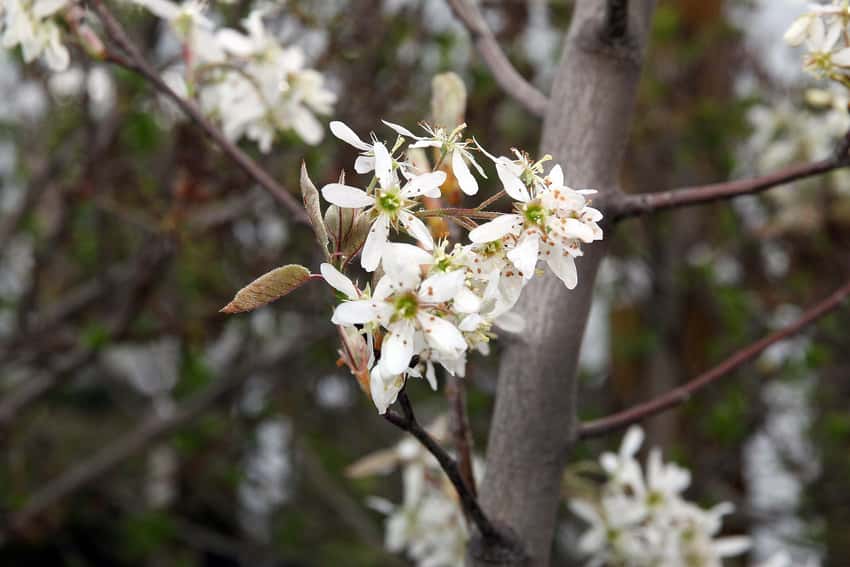
A small serviceberry with an upright framework and gently spreading branches, Autumn Brilliance brings white flower clusters to the spring garden. Purplish-blue fruit follows, while the green summer canopy changes to bright red in autumn. Its balanced form makes it useful as a flowering specimen.
At a glance
- Sun
- Full sun to partial shade
- Size
- Height: 20 ft · Width: 15 ft
- Water
- Moderately moist, well-drained soil
- Hardiness
- USDA 4
- Bloom
- White, spring
Sizes & prices
- #15 SS$224.99
- #20 MSServiceberry - Yummy$239.99
- #7$69.99
Catalog updated September 8, 2026. This is not a live stock count; please call to confirm availability and price.
Ask about this plantSelect a section to expand.
Landscape use & tree form
- Use
- Ornamental flowering specimen
- Form
- Upright, moderately spreading
- Fruit / litter
- Small purple-blue edible fruits
- Major issues
- Serviceberries can develop rust, especially near juniper hosts.
- Growth rate
- Vigorous; faster than typical serviceberry
Resistance & tolerances
- Deer
- Occasional browsing and antler damage are possible; protect young trunks.
- Drought
- Parent-species guidance: moderate tolerance once established; water through extended dry periods.
- Wet soil
- Parent-species guidance: poorly drained sites are unsuitable; use moist but well-drained soil.
Resistance is not a guarantee; deer and rabbits may browse any plant.
Pollinators & wildlife
- Attracts
- Pollinators
- Birds
- Fruit provides food
Native range
- Native range / parentage
- Cultivated serviceberry with North American species ancestry.
Seasonal interest
- Foliage
- Green summer leaves; strong red to orange autumn color; deciduous.
Growing & care
- Pruning
- Routine pruning is usually unnecessary. Remove crossing or damaged branches; cut unwanted root suckers at ground level while small.
- Soil
- Moist, well-drained soil; mildly acidic to neutral conditions suit serviceberries.
Sources & photo credits
University of Minnesota Extension
University of Maryland Extension
Utah State University Extension
www.piedmontmastergardeners.org
Photo: David J. Stang · CC BY-SA 4.0

Reviewed September 22, 2026. Growing conditions vary by location.