Trees
Aesculus × carnea 'Fort McNair'
Fort McNair red horse chestnut
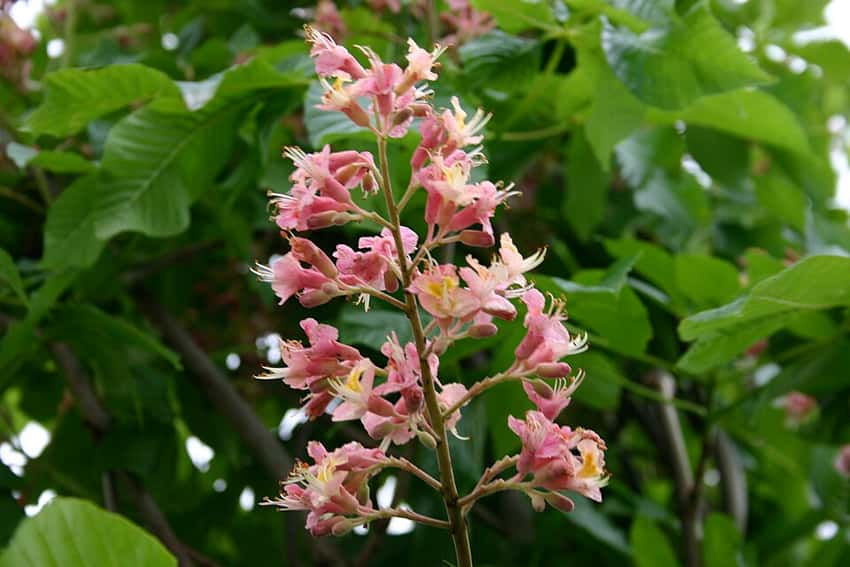
A rounded shade tree with bold, hand-shaped leaves and upright clusters of pink flowers with yellow throats in spring. Its dark green crown turns yellow in autumn, giving the tree a second season of color. Allow room for its broad canopy and keep fallen horse chestnuts away from children and pets.
At a glance
- Sun
- Full sun
- Size
- Height: About 35 ft at maturity · Width: About 25 ft
- Water
- Moist, not soggy soil
- Hardiness
- USDA 5–9
- Bloom
- Pink with yellow throats in spring
Sizes & prices
- #10Ft McNair Buckeye$239.99
Catalog updated September 8, 2026. This is not a live stock count; please call to confirm availability and price.
Ask about this plantSelect a section to expand.
Landscape use & tree form
- Use
- Shade tree; ornamental specimen
- Form
- Dense, rounded crown
- Growth rate
- Slow
- Fruit / litter
- Seed capsules and fallen leaves; site away from paving
- Major issues
- Leaf blotch, powdery mildew and drought scorch; seed capsules create litter and are poisonous if eaten.
Resistance & tolerances
- Deer
- Usually less attractive to browsing deer; not deer-proof.
- Drought
- Poor long-term drought performance; dry conditions can scorch leaves.
- Wet soil
- Good drainage is required; avoid waterlogged sites.
Resistance is not a guarantee; deer and rabbits may browse any plant.
Pollinators & wildlife
- Attracts
- Bees, Hummingbirds
Keep in mind: Horse chestnuts are toxic if eaten; they are not edible chestnuts.
Seasonal interest
- Foliage
- Dark green, turning golden yellow in fall
Growing & care
- Soil
- Deep, fertile, moisture-retentive but well-drained soil; acidic soil preferred.
- Pruning
- Little shaping is needed. Avoid heavy canopy thinning that suddenly exposes the thin bark to sun.
Sources & photo credits
Photo: SB Johnny · CC BY-SA 3.0

Image notes: Fort McNair red horse chestnut flowers. Photo: SB Johnny / Wikimedia Commons, CC BY-SA 3.0. Wikimedia 960 px thumbnail; no other edits.
Reviewed September 22, 2026. Growing conditions vary by location.