
Trees
Acer palmatum 'Tamukeyama'
Tamukeyama Japanese maple
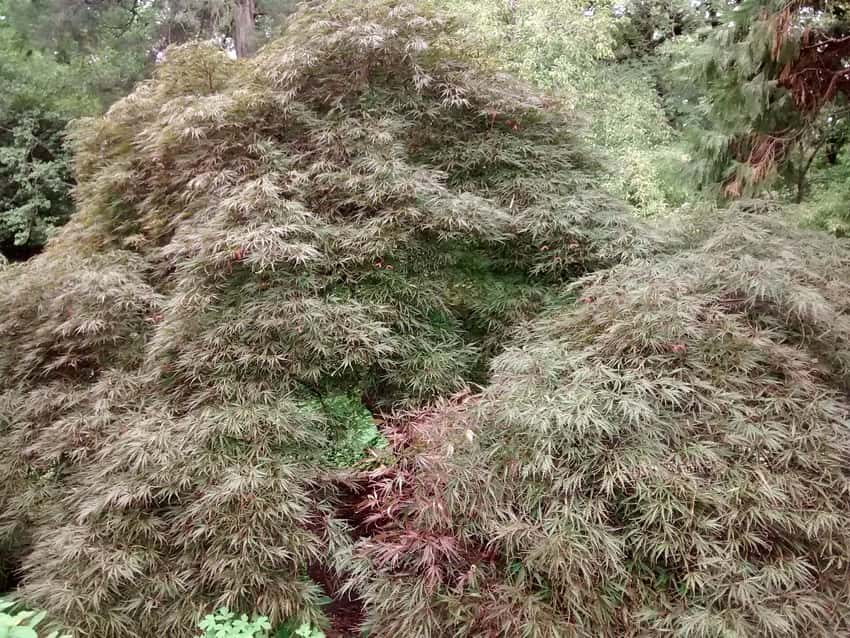
Tamukeyama develops a spreading, weeping framework clothed in deeply divided red leaves. It can grow more irregularly and upright than some other laceleaf selections before forming its cascading canopy. Dark red spring foliage generally carries red tones into summer, followed by fiery autumn shades that may include orange.
At a glance
- Sun
- Filtered sun to partial shade; protect from harsh afternoon sun
- Size
- Height: 6–8 ft in 10 years · Width: 6–8 ft in 10 years
- Water
- Evenly moist, well-drained soil
- Hardiness
- USDA 5–8
Sizes & prices
- #7$224.99
- #10$309.99
Catalog updated September 8, 2026. This is not a live stock count; please call to confirm availability and price.
Ask about this plantSelect a section to expand.
Landscape use & tree form
- Use
- Ornamental specimen
- Foliage
- Deciduous
- Form
- Weeping
- Growth rate
- Slow to moderate; site-dependent
Resistance & tolerances
- Deer
- Mild resistance reported for Japanese maple; protect young trees.
- Drought
- Poor tolerance; dry soil can scorch leaves.
- Wet soil
- Needs drainage; avoid waterlogged soil.
Resistance is not a guarantee; deer and rabbits may browse any plant.
Seasonal interest
- Fall color
- Red
Growing & care
- Soil
- Humus-rich, slightly acidic, moist but freely draining soil; avoid saturated planting pockets.
- Pruning
- Keep pruning minimal and preserve the natural branching. Remove dead or crossing shoots; make small corrective cuts after full leaf expansion to limit sap bleeding. Cut back to a well-placed side branch, without leaving stubs.
Sources & photo credits
University of Minnesota Extension
Iowa State University Extension

Reviewed September 22, 2026. Growing conditions vary by location.