
Trees
Acer palmatum 'Kiyohime'
Kiyohime Japanese maple
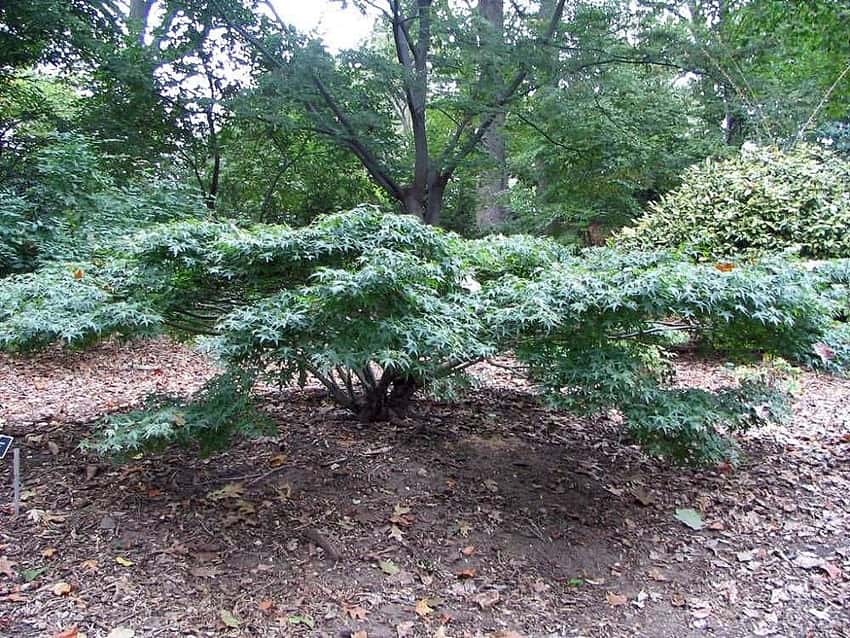
Kiyohime forms a dense, many-branched Japanese maple that spreads much farther sideways than upward. Tiny spring leaves have purple-red borders, while autumn brings brighter red through deep maroon. Its low, broad shape is particularly important when planning space around the plant, even though it is classified as a dwarf.
At a glance
- Sun
- Dappled shade
- Size
- Height: 2–3 ft in 10 years · Width: 6–7 ft in 10 years
- Water
- Evenly moist, well-drained soil
- Hardiness
- USDA 5–9
Sizes & prices
- #1$64.99
Catalog updated September 8, 2026. This is not a live stock count; please call to confirm availability and price.
Ask about this plantSelect a section to expand.
Landscape use & tree form
- Use
- Container; bonsai; small-space specimen
- Foliage
- Deciduous
- Form
- Low, dense and spreading
- Growth rate
- Slow to moderate
Resistance & tolerances
- Deer
- Mild resistance reported for Japanese maple; protect young trees.
- Drought
- Poor tolerance; dry soil can scorch leaves.
- Wet soil
- Needs drainage; avoid waterlogged soil.
Resistance is not a guarantee; deer and rabbits may browse any plant.
Growing & care
- Site
- Shelter from drying winds and harsh afternoon sun.
- Pruning
- Keep pruning minimal and preserve the natural branching. Remove dead or crossing shoots; make small corrective cuts after full leaf expansion to limit sap bleeding. Cut back to a well-placed side branch, without leaving stubs.
- Soil
- Humus-rich, slightly acidic, moist but freely draining soil; avoid saturated planting pockets.
Sources & photo credits
University of Minnesota Extension
Iowa State University Extension
Photo: David J. Stang · CC BY-SA 4.0

Reviewed September 22, 2026. Growing conditions vary by location.