
Perennials
Ratibida pinnata
Gray-headed coneflower
Also known as: Yellow coneflower · Drooping coneflower
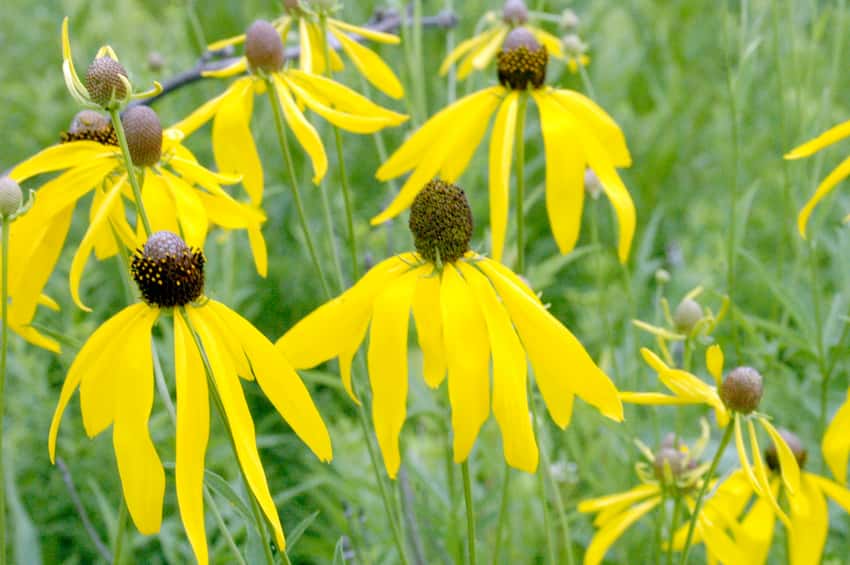
Drooping yellow petals surround raised gray-brown cones. Tall, airy stems suit naturalistic borders and prairie plantings. Leave sound stems for winter interest and wildlife if desired. Remove dead stems before fresh spring growth, avoiding new shoots and retaining healthy basal foliage.
At a glance
- Sun
- Full sun; tolerates part shade
- Mature size
- Up to 5 ft. tall × Expands by rhizomes wide
- Water
- Dry to moderately moist; well drained
- Hardiness
- USDA zones 3–8
- Bloom
- Yellow; summer.
Sizes & prices
- #1$18.99
Catalog updated September 8, 2026. This is not a live stock count; please call to confirm availability and price.
Ask about this plantSelect a section to expand.
Resistance & tolerances
- Drought
- Tolerant once established.
- Wet soil
- Moisture is tolerated with drainage; do not overwater.
- Soil
- Tolerates poor and rocky soils.
Pollinators & wildlife
- Attracts
- Bees, Butterflies
- Caterpillar host
- Silvery checkerspot
Native range
- Native range / parentage
- Native to central and eastern North America, including the tristate. Species native to Kentucky.
- Tristate native status
- Native to central and eastern North America, including the tristate.
Growing & care
- Fertility
- Avoid rich feeding, which can encourage flopping.
- Support
- Nearby sturdy plants can support tall stems.
- Seeds
- Leave some seed heads for birds.
Sources & photo credits
Photo: Frank Mayfield · CC BY-SA 2.0

Image notes: Yellow coneflower at James Woodworth Prairie Preserve. species photograph; uncropped. Surrounding plants are not included.
Reviewed September 19, 2026. Growing conditions vary by location.