
Perennials
Mertensia virginica
Virginia bluebells
Also known as: Eastern bluebells · Virginia cowslip
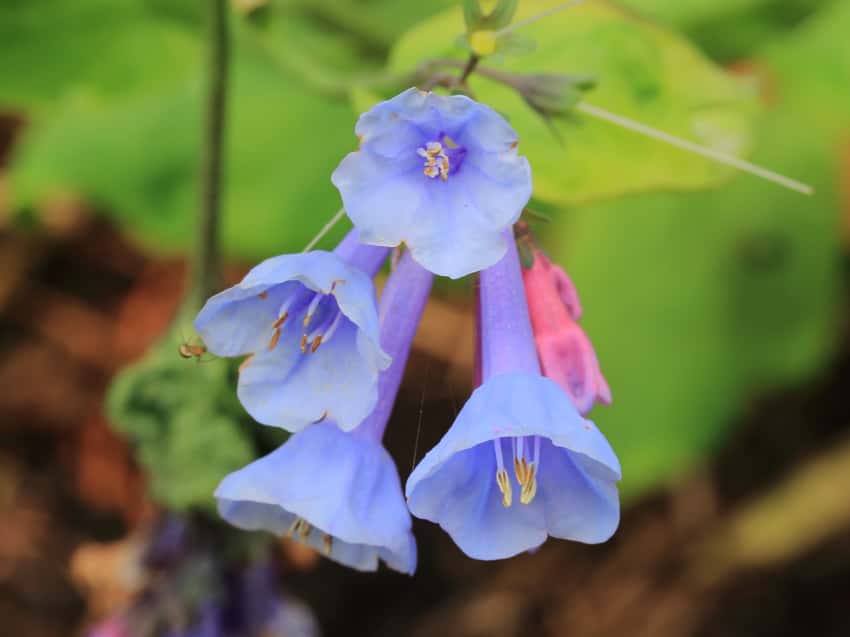
Pink buds open into nodding blue bells above soft blue-green leaves. A native spring wildflower that disappears underground for summer. Allow foliage to die back naturally as plants go dormant in summer. Pair with later-emerging shade perennials to fill the seasonal gap.
At a glance
- Sun
- Part shade to full shade
- Mature size
- 18–24 in. tall × 12–18 in. wide
- Water
- Moist, rich, well-drained soil
- Hardiness
- USDA zones 3–9
- Bloom
- Blue from pink buds; March–May, depending on weather.
Sizes & prices
- 6"$19.99
Catalog updated September 8, 2026. This is not a live stock count; please call to confirm availability and price.
Ask about this plantSelect a section to expand.
Resistance & tolerances
- Rabbits
- Resistant, not browse-proof.
- Drought
- Needs moisture while actively growing.
- Wet soil
- Moist woodland soil with drainage.
- Black walnut
- Listed as tolerant.
Resistance is not a guarantee; deer and rabbits may browse any plant.
Pollinators & wildlife
- Attracts
- Bees, Butterflies, Hummingbirds
Native range
- Native range / parentage
- Native to eastern North America, including Ohio, Kentucky and Indiana. Species native to Kentucky.
- Tristate native status
- Native to eastern North America, including Ohio, Kentucky and Indiana.
Growing & care
- Dormancy
- Allow leaves to fade; summer disappearance is normal.
- Companions
- Pair with ferns or hostas to fill the dormant gap.
- Spread
- May self-seed into suitable soil.
Sources & photo credits
University of Kentucky Extension
Photo: Dominicus Johannes Bergsma · CC BY-SA 3.0

Image notes: Virginia bluebells in bloom. species photograph; uncropped. Surrounding plants are not included.
Reviewed September 19, 2026. Growing conditions vary by location.