
Herbs
Satureja spicigera
Creeping savory
Also known as: Satureja repanda
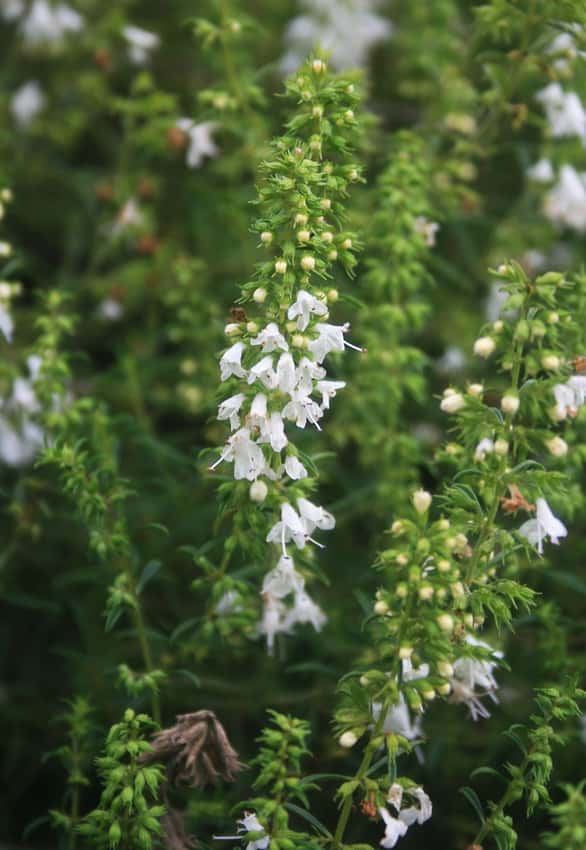
Small, peppery leaves cover a low, spreading mat, followed by upright spikes of white summer flowers. Creeping savory suits sunny edging, rock gardens and herb containers. Use its leaves fresh or dried; free-draining soil keeps this woody-based perennial healthier through winter. Grow in well-drained, neutral to slightly alkaline soil.
At a glance
- Sun
- Full sun
- Mature size
- Up to about 4 in. tall × About 4–20 in. (RHS range) wide
- Water
- Well-drained soil; water young plants and pots as needed
- Hardiness
- USDA zones 7–8 (Richters rating)
- Bloom
- White; summer
Sizes & prices
- 4.5"$6.99
Catalog updated September 8, 2026. This is not a live stock count; please call to confirm availability and price.
Ask about this plantSelect a section to expand.
Resistance & tolerances
- Wet soil
- Avoid excessive winter wet.
Pollinators & wildlife
- Attracts
- Bees
Culinary uses
- Edible parts
- Peppery leaves, fresh or dried.
- Uses
- Bean and lentil dishes, stuffing and sausages.
Seasonal interest
- Form
- Low, spreading evergreen subshrub; winter foliage depends on conditions.
Growing & care
- Pruning
- Clip after flowering to keep the mat compact.
- Harvest
- Pick fresh leaves as needed; dry small bunches for later use.
- Winter
- Richters rates zones 7–8. Use a sheltered, well-drained location and protect containers in colder conditions.
Clip lightly after flowering to maintain a compact mat. Protect from excessive winter wet.
Sources & photo credits
Photo: Franz Xaver · CC BY-SA 3.0

Image notes: Satureja spicigera flowering in Georgia’s Lesser Caucasus. species photograph; original framing retained, display versions resized and compressed.
Reviewed 2026-09-29. Growing conditions vary by location.