
Herbs
Thymus vulgaris
English thyme
Also known as: Common thyme · Garden thyme · German thyme
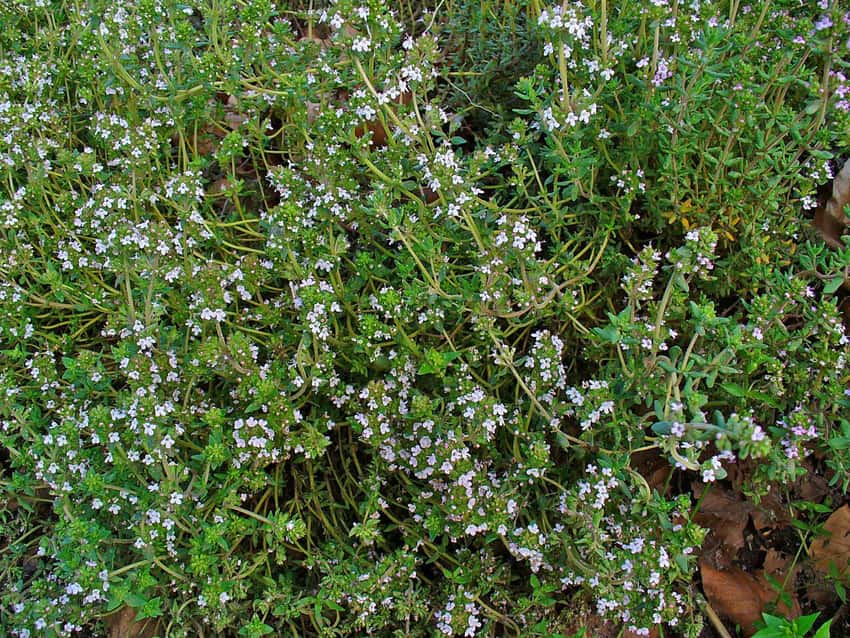
A low, woody-based perennial with tiny aromatic leaves and pale purple flowers. A useful choice for sunny herb beds and rock gardens. Trim lightly after flowering; avoid hard cuts into bare wood.
At a glance
- Sun
- Full sun
- Mature size
- 6–12 in. tall × 6–12 in. wide
- Water
- Dry to moderate; excellent drainage
- Hardiness
- USDA zones 5–9
- Bloom
- Pale purple; May–July
Sizes & prices
- 4.5"$6.99
- 6"$9.99
Catalog updated September 8, 2026. This is not a live stock count; please call to confirm availability and price.
Ask about this plantSelect a section to expand.
Resistance & tolerances
- Drought
- Tolerates dry conditions.
- Wet soil
- Avoid waterlogging, especially in winter.
- Deer & rabbits
- Resistant, not browse-proof.
Resistance is not a guarantee; deer and rabbits may browse any plant.
Pollinators & wildlife
- Attracts
- Bees, Butterflies
Culinary uses
- Edible part
- Aromatic leaves, fresh or dried.
- Try in
- Soups, stews, sauces, meat and fish.
- Harvest
- Best just before flowering; leave leafy growth and woody stems intact.
Seasonal interest
- Form
- Low, woody-based evergreen mound.
Growing & care
- Local tip
- A freely draining bed or container is preferable to a soggy clay pocket.
- Harvest
- Snip leaves and leafy stems as needed during active growth. Harvest after dew dries; dry or freeze suitable cuttings for later use.
Avoid persistently wet soil. Trim to encourage fresh growth; older plants can become woody and open.
Sources & photo credits
University of Minnesota Extension

Image notes: Thyme foliage and flowers. species photo; uncropped.
Reviewed September 21, 2026. Growing conditions vary by location.